
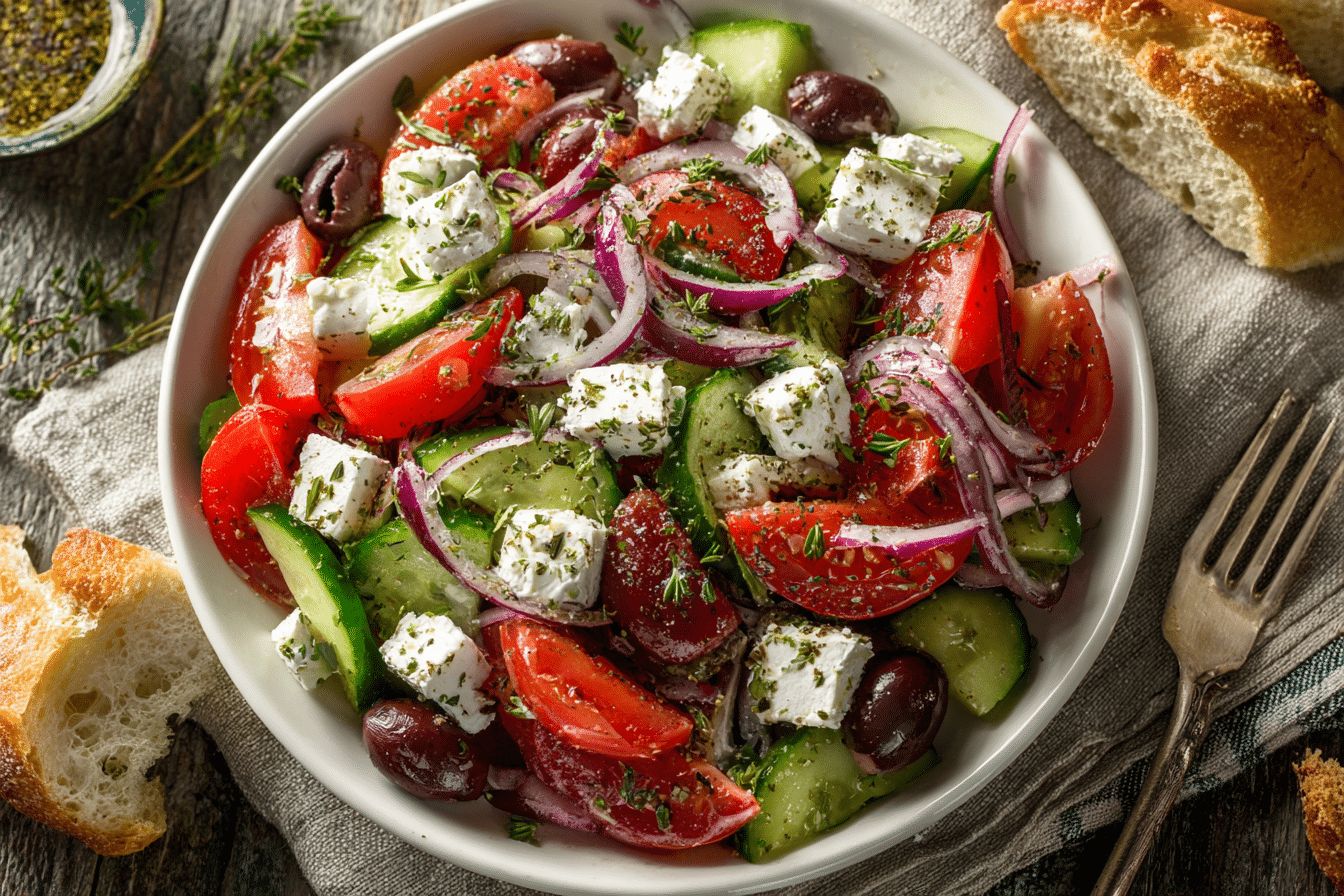
A good Mediterranean Greek Salad is more than just a side—it’s a vibrant, refreshing dish that brings crisp textures and bold, salty-sweet flavors to any table. Juicy tomatoes, crisp cucumbers, red onions, briny olives, and creamy feta come together with a punchy olive oil and oregano dressing that tastes like summer in every bite.
This salad is simple but never boring. Every component plays its part, from the crunch of cucumber to the tangy richness of feta. It’s the kind of dish you can throw together in minutes, but it still feels like something special.
Whether you’re serving it with grilled meats, adding it to a mezze platter, or eating it solo for a light lunch, this Mediterranean Greek Salad delivers freshness, balance, and beauty in every forkful.
Ingredients Overview
Ripe tomatoes are the heart of a Greek salad. Use cherry tomatoes for a burst of sweetness or vine-ripened tomatoes for a juicier texture. If your tomatoes are very juicy, you can seed them before chopping to prevent a watery salad.
Cucumbers bring crunch and freshness. Persian or English cucumbers are best—they have thin skin and fewer seeds, so there’s no need to peel. Slice them into half-moons or bite-sized chunks for easier eating.
Red onion adds a sharp bite that cuts through the creaminess of the feta and the richness of the olive oil. Slice it thinly and soak in cold water for 10 minutes to mellow the flavor if it’s too pungent.
Kalamata olives are classic. Their salty, briny profile is essential in balancing the salad. Pit them before slicing or leave them whole for a more rustic look. Black olives can be substituted in a pinch, but they’re milder and less complex.
Feta cheese is the crowning ingredient. Look for a block of feta in brine, not pre-crumbled. Crumbling it yourself gives better texture and flavor. Goat’s milk feta is tangier, while sheep’s milk feta is creamier.
The dressing is a simple combination of extra virgin olive oil, red wine vinegar, dried oregano, salt, and pepper. Use the best-quality olive oil you can—its fruity flavor shines in raw preparations like this. Red wine vinegar adds brightness, and oregano brings earthy warmth. A squeeze of fresh lemon juice adds a citrus lift, though it’s optional.
Step-by-Step Instructions
-
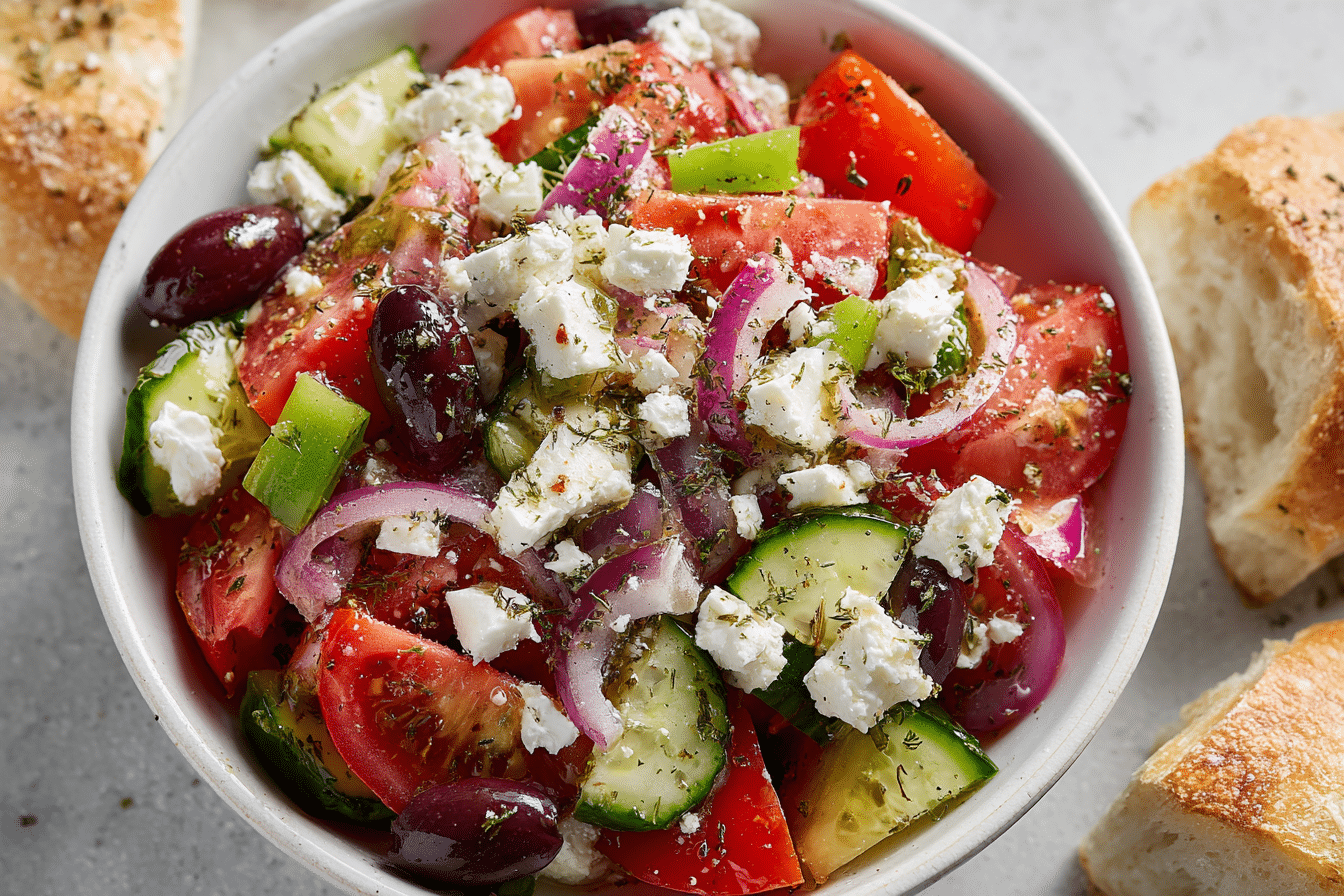
Prepare the Vegetables: Chop 2 cups of ripe tomatoes into wedges or large chunks. Slice 1 large cucumber into half-moons. Thinly slice ½ a small red onion. If desired, soak the onion in cold water for 10 minutes, then drain and pat dry.
-
Combine in a Bowl: Add the chopped tomatoes, cucumber, and red onion to a large mixing bowl. Add ¾ cup Kalamata olives (pitted, halved, or whole depending on preference).
-
Make the Dressing: In a small bowl or jar, whisk together ¼ cup extra virgin olive oil, 2 tablespoons red wine vinegar, ½ teaspoon dried oregano, ¼ teaspoon salt, and black pepper to taste. Optional: add 1 teaspoon lemon juice for extra brightness.
-
Dress the Salad: Pour the dressing over the vegetables and toss gently until everything is coated and glistening. Be careful not to overmix—the tomatoes can break down easily.
-
Add Feta Last: Crumble ½ cup of feta cheese over the top just before serving. This keeps it from becoming overly soft or disappearing into the salad.
-
Taste & Adjust: Add more salt, pepper, or vinegar if needed. For more tang, a splash of lemon juice works well. Serve immediately.
Common mistakes include overdressing the salad or mixing it too early—tomatoes will release their juices and make it soggy. Add the feta last and toss gently for the best texture.
Tips, Variations & Substitutions
If making ahead, chop the vegetables and store them separately from the dressing. Combine everything just before serving for the freshest result.
To make it a meal, add grilled chicken, shrimp, or chickpeas. For a low-carb option, skip the chickpeas and add avocado. To bulk it up into a grain bowl, mix in cooked quinoa, farro, or orzo.
Fresh herbs like parsley or dill can be tossed in for extra flavor. Swap red wine vinegar for white wine vinegar or lemon juice if needed.
For a dairy-free version, skip the feta or use a plant-based alternative. You can also try adding capers for extra brine or roasted red peppers for sweetness and color.
Serving Ideas & Occasions
This Mediterranean Greek Salad pairs beautifully with grilled meats like chicken, lamb, or steak. It also complements fish dishes, especially those with lemon or herbs.
It’s a staple on mezze platters—serve it alongside hummus, pita, tzatziki, and olives for a colorful spread. It also works as a light lunch with crusty bread or added protein.
Take it to potlucks, picnics, or BBQs—it travels well and holds up longer than lettuce-based salads. Serve cold or at room temperature for the best flavor.
For drinks, pair it with chilled white wine, sparkling water with lemon, or a crisp iced tea.
Nutritional & Health Notes
Greek salad is naturally gluten-free and vegetarian, and rich in heart-healthy fats from olive oil and olives. Feta adds calcium and protein, while tomatoes and cucumbers provide hydration, fiber, and essential vitamins like C and K.
If you’re watching sodium, use fewer olives or rinse them, and opt for a smaller amount of feta. Light versions of feta are available for lower fat content, or you can mix in a bit of plain Greek yogurt for creaminess.
Adding lean protein like grilled chicken makes it a complete meal that supports muscle repair and energy. It’s hydrating, colorful, and nutrient-dense—great for summer or any clean eating plan.
FAQs
-
Can I make Greek salad ahead of time?
Yes, but store the dressing separately and add it just before serving. The veggies hold their texture best when freshly combined. Feta should also be added last to avoid crumbling into the dressing. -
What’s the best olive to use in Greek salad?
Kalamata olives are traditional and offer rich, briny flavor. You can substitute with black olives or green olives, but the taste will be milder. -
Can I use bottled dressing?
While homemade dressing is recommended for freshness and flavor, a high-quality bottled Greek or vinaigrette dressing will work in a pinch. -
Is Greek salad keto-friendly?
Yes, it’s naturally low in carbs and high in healthy fats. Just ensure your olives and dressing don’t contain added sugars. -
Can I add lettuce?
Traditional Greek salad does not include lettuce, but you can add romaine or mixed greens to stretch the salad or make it more filling. -
What’s the difference between Mediterranean and Greek salad?
Greek salad is a Mediterranean dish, but typically includes tomatoes, cucumber, onion, olives, feta, and olive oil. Mediterranean salads may vary more widely, sometimes including grains, beans, or other vegetables. -
How long does Greek salad last in the fridge?
It’s best eaten fresh but can be stored for up to 2 days. Expect the tomatoes to soften and the dressing to separate slightly. Add a fresh squeeze of lemon before serving leftovers.Fresh Mediterranean Greek Salad (Fast & Healthy)
A fresh, vibrant Mediterranean Greek Salad featuring tomatoes, cucumbers, red onion, Kalamata olives, and creamy feta, tossed in a zesty olive oil and oregano dressing.
- Prep Time: 10 minutes
- Cook Time: 0 minutes
- Total Time: 10 minutes
- Yield: 4 servings 1x
Ingredients
Scale2 cups chopped tomatoes
1 large cucumber, sliced
½ small red onion, thinly sliced
¾ cup Kalamata olives (pitted)
½ cup feta cheese, crumbled
¼ cup extra virgin olive oil
2 tbsp red wine vinegar
½ tsp dried oregano
¼ tsp salt
Black pepper, to taste
Optional: 1 tsp lemon juiceInstructions
-
Chop tomatoes, slice cucumber, and thinly slice red onion.
-
Combine vegetables and olives in a large bowl.
-
Whisk together olive oil, vinegar, oregano, salt, and pepper.
-
Pour dressing over vegetables and toss gently.
-
Crumble feta over the top just before serving.
-
Taste and adjust seasoning as needed.
Notes
Soak onions in cold water to reduce sharpness. Add grilled chicken or quinoa to turn it into a meal. Keep dressing separate until serving for freshness.