
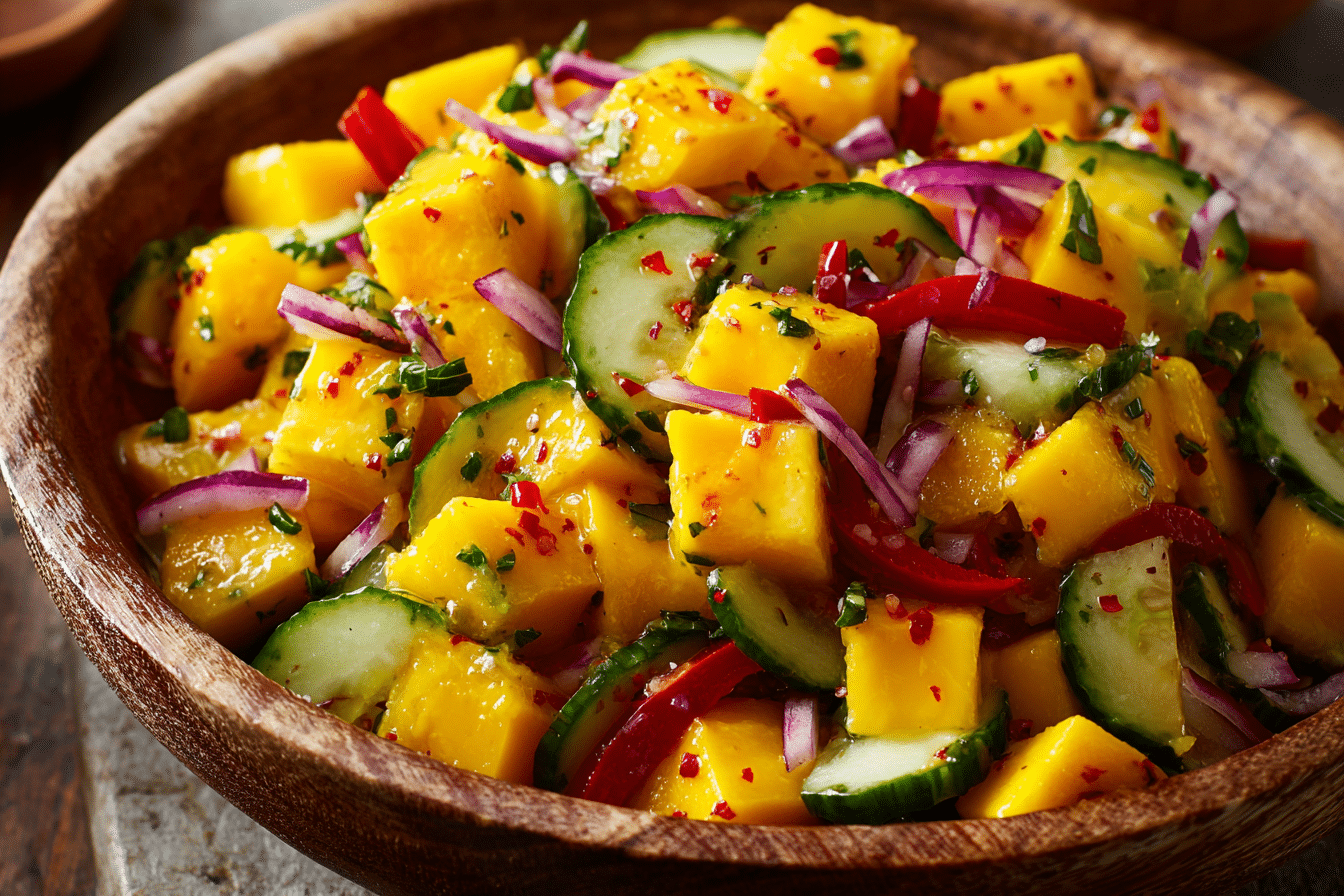
There is something undeniably refreshing about a bowl of Mango Salad set on the table. The vibrant color alone hints at its juicy sweetness, while the crisp vegetables and bright dressing promise contrast in every forkful. It is the kind of dish that feels light yet satisfying, simple yet layered with flavor.
Mango Salad brings together ripe mangoes, crunchy vegetables, fresh herbs, and a tangy dressing that ties everything together. The combination of sweet, sour, salty, and mild heat creates balance without overwhelming the palate. Each bite delivers soft fruit against crisp greens, with bursts of citrus and herbs that linger pleasantly.
Whether served as a side dish on a warm afternoon or as a light main course, this salad captures the essence of seasonal cooking. It is colorful, aromatic, and deeply refreshing without being heavy.
Ingredients Overview
The heart of Mango Salad is, of course, ripe mango. Choose mangoes that give slightly when pressed but are not mushy. They should be fragrant at the stem and richly golden inside. The natural sweetness of mango forms the foundation of the dish.
Red bell pepper adds crunch and a mild sweetness that complements the fruit. Thinly sliced red onion provides sharpness and contrast. If raw onion feels too strong, soaking the slices in cold water for ten minutes softens their bite while keeping their crisp texture.
Cucumber brings a cooling element and extra crunch. English cucumbers work well because they have thin skin and minimal seeds, but regular cucumbers can also be used if peeled and seeded.
Fresh herbs are essential. Cilantro adds brightness and a citrus-like aroma. Fresh mint introduces a cooling note that pairs beautifully with mango. Using both creates depth and freshness.
For texture, roasted peanuts or cashews add a subtle nuttiness and crunch. They also make the salad more filling.
The dressing is simple yet balanced: freshly squeezed lime juice for acidity, a small amount of honey to round out tartness, a splash of fish sauce or soy sauce for savory depth, and a touch of finely grated ginger. A small amount of olive oil helps carry the flavors and coat the ingredients evenly.
For gentle heat, a thinly sliced red chili can be added. This is optional but brings warmth that contrasts with the sweetness of the mango.
Step-by-Step Instructions
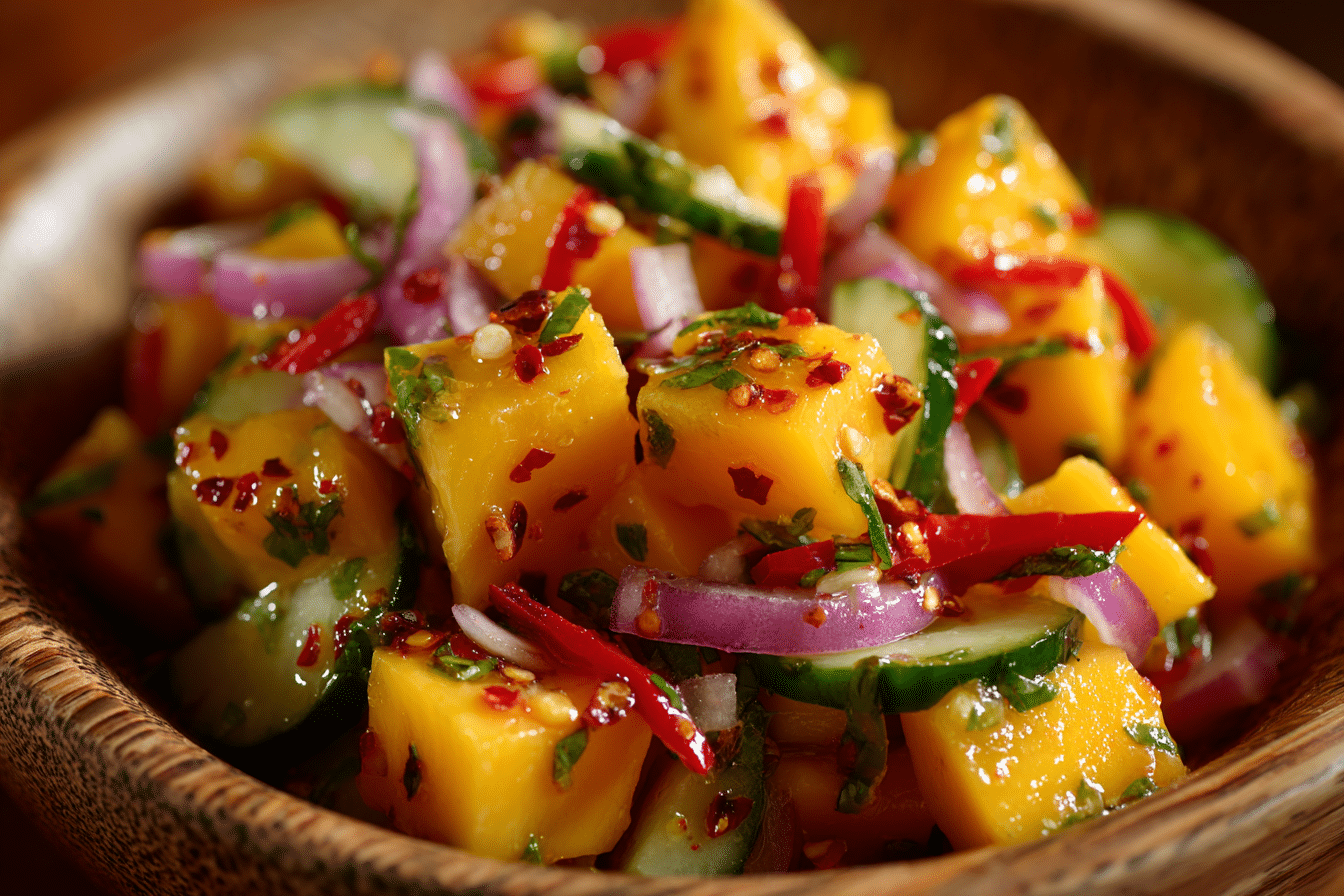
Start by preparing the mango. Peel the fruit carefully and slice the flesh away from the pit. Cut the mango into thin strips or bite-sized cubes, depending on your preference. Uniform pieces help the salad look appealing and allow for even distribution of flavor.
Next, prepare the vegetables. Slice the red bell pepper into thin strips. Thin slices provide crunch without overpowering the softer mango. Cut the cucumber into thin half-moons or matchsticks. Thinly slice the red onion and, if desired, soak it briefly in cold water before draining well.
Chop the fresh cilantro and mint just before assembling the salad. Cutting them too early can cause bruising and loss of aroma.
To prepare the dressing, whisk together fresh lime juice, honey, fish sauce or soy sauce, grated ginger, and olive oil in a small bowl. Taste and adjust. If it is too sharp, add a touch more honey. If it feels too sweet, add more lime juice. The dressing should taste bright and slightly tangy with a gentle savory undertone.
In a large mixing bowl, combine the mango, bell pepper, cucumber, and drained red onion. Pour the dressing over the top. Toss gently using salad tongs or clean hands. Be careful not to crush the mango pieces. The goal is to coat everything evenly while preserving texture.
Add the chopped herbs and toss once more, lightly. Sprinkle roasted peanuts or cashews over the salad just before serving to maintain their crunch.
Allow the salad to rest for about ten minutes before serving. This short resting period allows the flavors to mingle while keeping the vegetables crisp. Avoid letting it sit too long, as the salt and acid in the dressing can soften the vegetables excessively.
Tips, Variations & Substitutions
If you prefer a more substantial Mango Salad, add shredded cooked chicken or grilled shrimp. These proteins pair well with the sweet and tangy profile of the dish.
For a vegetarian version, replace fish sauce with soy sauce or tamari. A splash of rice vinegar can also be used alongside lime juice for added complexity.
Green mango can be used for a more tart variation. In that case, reduce the lime juice slightly and adjust sweetness accordingly.
If you do not enjoy cilantro, substitute fresh basil for a different aromatic layer. Thai basil works particularly well.
To add additional texture, consider thinly sliced cabbage or shredded carrots. These ingredients increase crunch and make the salad more filling.
When preparing ahead, keep the dressing separate and toss just before serving. This prevents sogginess and maintains vibrant color and texture.
Serving Ideas & Occasions
Mango Salad shines as a side dish alongside grilled chicken, fish, or seafood. The bright acidity cuts through richer main courses, offering contrast and freshness.
It also works beautifully as part of a summer buffet spread with rice dishes, skewers, and flatbreads. The vibrant colors add visual appeal to any table.
For a light lunch, serve Mango Salad on a bed of mixed greens or alongside jasmine rice. It can also be tucked into lettuce cups for an elegant appetizer.
Chilled sparkling water with lime or iced green tea complements the flavors without overpowering them. The salad is particularly welcome on warm days when lighter dishes are preferred.
Nutritional & Health Notes
Mango Salad is naturally rich in vitamins and antioxidants. Mango provides vitamin C and vitamin A, which support overall wellness. The fresh vegetables contribute fiber, which supports digestion and satiety.
The healthy fats from olive oil and nuts add balance and help with nutrient absorption. Because the dressing is light and primarily citrus-based, the salad remains lower in heavy fats compared to creamy alternatives.
Using fresh ingredients keeps sodium levels moderate, especially if soy sauce is used in controlled amounts. Adjusting sweetness allows flexibility for different dietary preferences.
This dish fits well into balanced eating patterns and can be adapted for vegetarian, dairy-free, and gluten-free diets with simple substitutions.
FAQs
-
How do I choose the right mango for Mango Salad?
Select mangoes that feel slightly soft when gently pressed but are not overly mushy. They should have a fragrant aroma near the stem. Avoid mangoes with large dark bruises. A ripe mango provides sweetness and soft texture that balances the crisp vegetables.
-
Can I prepare Mango Salad in advance?
You can slice the vegetables and mango a few hours ahead, but store them separately from the dressing. Combine everything shortly before serving to maintain texture. If assembled too early, the vegetables may release moisture and become soft.
-
Is Mango Salad spicy?
The base recipe is not inherently spicy. Heat comes from optional sliced chili. You can control the level by adjusting the amount or omitting it entirely. Without chili, the salad remains sweet, tangy, and refreshing.
-
What can I use instead of fish sauce?
Soy sauce or tamari works well as a substitute. For a slightly different profile, coconut aminos can also be used. These options provide the savory element without seafood ingredients.
-
How long does Mango Salad last in the refrigerator?
It is best enjoyed fresh on the day it is made. If stored in an airtight container, it can last up to 24 hours, though the vegetables may soften slightly. Stir gently before serving again.
-
Can I use frozen mango?
Fresh mango is strongly recommended for the best texture. Frozen mango tends to release excess moisture as it thaws, which can make the salad watery and dilute the dressing.
-
How can I turn Mango Salad into a complete meal?
Add grilled chicken, shrimp, tofu, or quinoa to make it more substantial. Including a protein source and serving it with rice or whole grains creates a balanced and satisfying meal.
PrintMango Avocado Salad for a Light, Refreshing Lunch
Mango Salad is a refreshing combination of ripe mango, crisp vegetables, fresh herbs, and a tangy lime dressing. Sweet, savory, and lightly zesty, it works beautifully as a side dish or light main course.
- Prep Time: 20 minutes
- Cook Time: 0 minutes
- Total Time: 20 minutes
- Yield: 4 servings 1x
Ingredients
2 large ripe mangoes, peeled and sliced
1 red bell pepper, thinly sliced
1 English cucumber, thinly sliced
1/4 small red onion, thinly sliced
1/4 cup fresh cilantro, chopped
2 tablespoons fresh mint, chopped
1/3 cup roasted peanuts or cashews
3 tablespoons fresh lime juice
1 tablespoon honey
1 tablespoon fish sauce or soy sauce
1 teaspoon freshly grated ginger
1 tablespoon olive oil
1 small red chili, thinly sliced optional
Salt to taste
Instructions
-
Peel and slice the mango into thin strips or cubes.
-
Slice the bell pepper, cucumber, and red onion thinly.
-
Soak the onion in cold water for 10 minutes if a milder flavor is desired, then drain.
-
In a small bowl, whisk together lime juice, honey, fish sauce or soy sauce, grated ginger, and olive oil.
-
In a large bowl, combine mango, bell pepper, cucumber, and onion.
-
Pour the dressing over the salad and toss gently to coat.
-
Add chopped cilantro and mint, then toss lightly again.
-
Sprinkle roasted peanuts or cashews on top just before serving.
-
Rest for 10 minutes before serving for flavors to blend.
Notes
Use ripe but firm mango for best texture. Adjust lime and honey to taste. Add protein such as grilled chicken or shrimp to turn it into a full meal.