
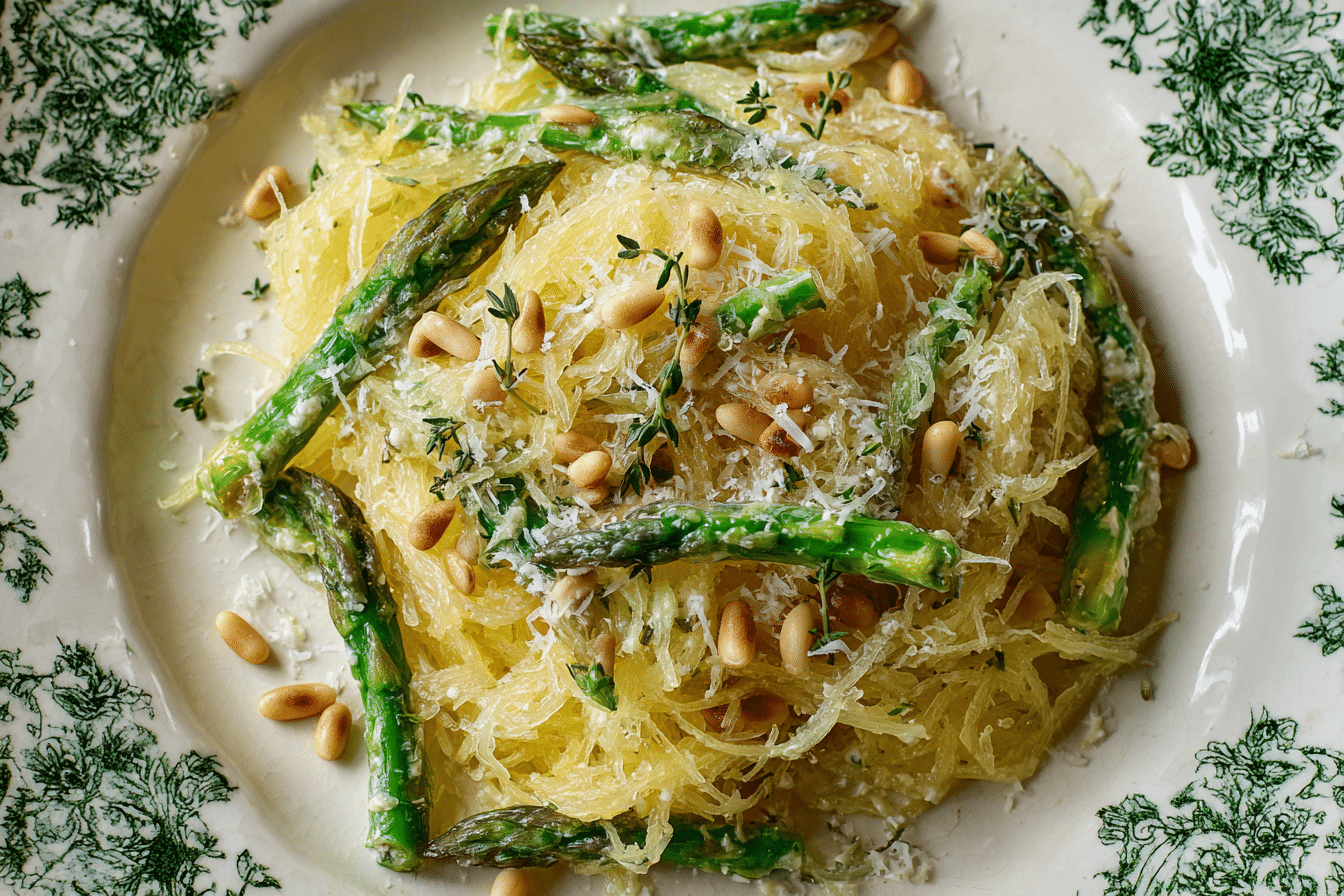
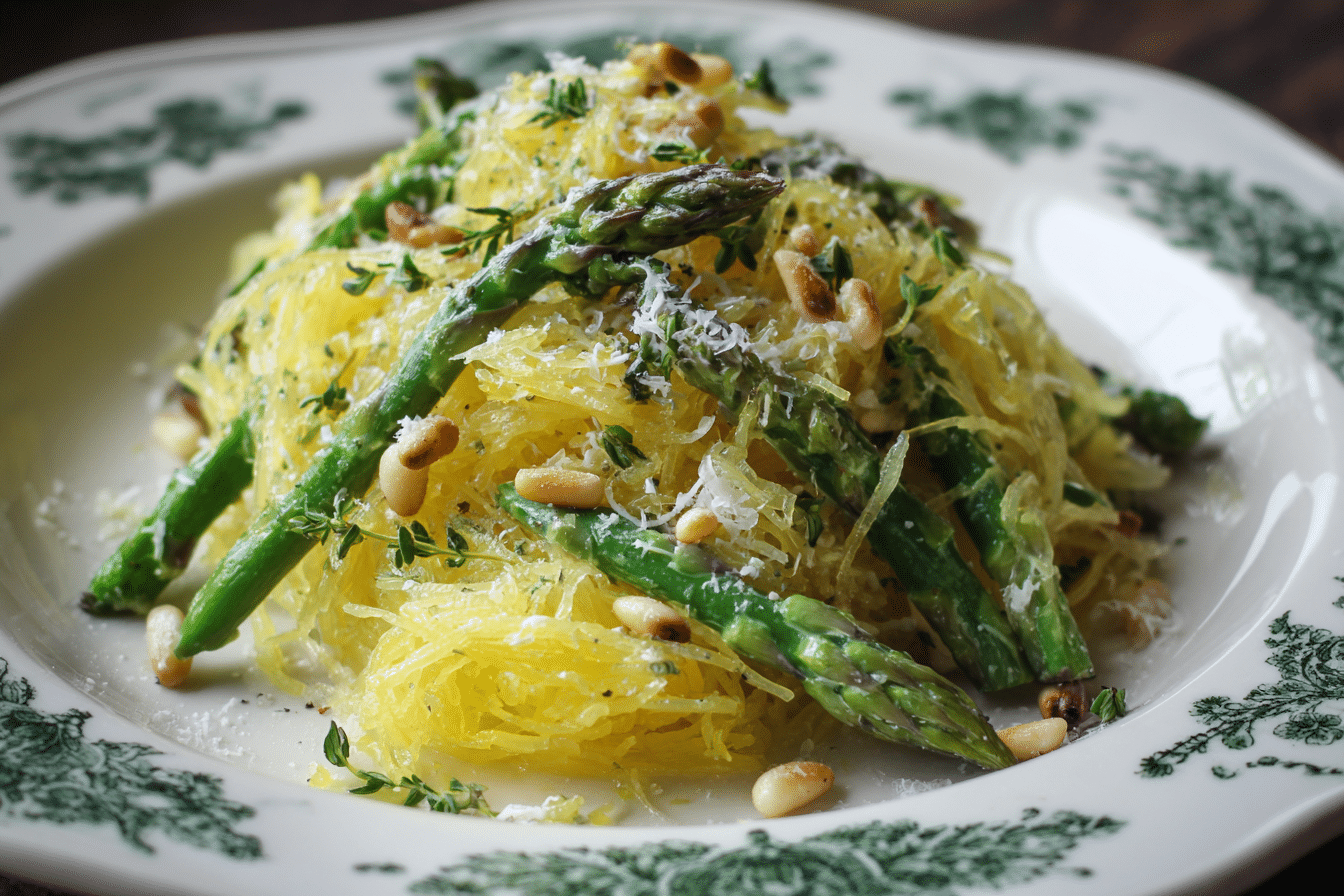
Spaghetti Squash with Asparagus, Ricotta, Lemon, and Thyme is a light yet satisfying dish that turns simple vegetables into a comforting meal. When roasted, spaghetti squash transforms into tender golden strands that resemble pasta, offering a delicate texture and subtle sweetness.
Tossed with crisp-tender asparagus, creamy ricotta, fresh lemon zest, and fragrant thyme, the flavors come together in a balanced and refreshing way. Each forkful carries a gentle richness from the cheese, brightness from citrus, and earthy warmth from herbs.
This recipe is especially appealing during spring and early summer, when asparagus is at its peak. It works beautifully as a vegetarian main course or as a vibrant side dish alongside grilled proteins. The combination of textures and fresh ingredients keeps the dish light without sacrificing satisfaction.
Ingredients Overview
The star of Spaghetti Squash with Asparagus, Ricotta, Lemon, and Thyme is, of course, the spaghetti squash. When roasted properly, its flesh pulls apart into long, tender strands that mimic pasta. Choose a squash that feels heavy for its size with firm, unblemished skin. A medium squash, about 3 to 4 pounds, yields enough for four servings.
Fresh asparagus adds color and a pleasant snap. Look for bright green spears with tightly closed tips. Thinner stalks cook quickly and blend easily with the squash strands. If only thick asparagus is available, peel the lower portion to prevent toughness.
Whole-milk ricotta provides creamy richness that gently coats the vegetables. Its mild flavor allows the lemon and thyme to shine. For a lighter option, part-skim ricotta works well, though it will be slightly less creamy. A spoonful of mascarpone can be mixed in for extra silkiness if desired.
Fresh lemon zest and juice bring necessary brightness. The zest contains aromatic oils that infuse the dish with citrus fragrance, while the juice balances the sweetness of the squash.
Fresh thyme offers a subtle herbal note that complements both the squash and ricotta. Dried thyme can substitute in smaller quantities, though fresh sprigs provide a cleaner flavor.
Olive oil, salt, black pepper, and a touch of grated Parmesan round out the seasoning and deepen the savory profile.
Step-by-Step Instructions
Begin by preheating your oven to 400°F. Carefully cut the spaghetti squash in half lengthwise using a sharp knife. Scoop out the seeds and stringy pulp from the center. Drizzle the cut sides with olive oil and season generously with salt and pepper.
Place the squash halves cut-side down on a parchment-lined baking sheet. Roasting cut-side down allows steam to build inside, helping the flesh soften evenly. Bake for 35 to 45 minutes, depending on size, until the skin yields slightly when pressed and a fork easily pierces the flesh.
While the squash roasts, prepare the asparagus. Trim off the woody ends and cut the spears into 1-inch pieces. In the last 10 to 12 minutes of the squash’s cooking time, spread the asparagus on a separate baking sheet, toss with olive oil, salt, and pepper, and roast until just tender. The spears should remain bright green and slightly crisp.
Once the squash is done, let it cool for several minutes. Using a fork, gently scrape the flesh to create spaghetti-like strands. Transfer the strands to a large bowl. Be careful not to over-scrape the shell, as the outermost layer can be watery.
Add the roasted asparagus to the bowl with the squash strands. Fold in ricotta by the spoonful, allowing it to melt slightly from the warmth of the vegetables. Add lemon zest, a squeeze of lemon juice, and fresh thyme leaves.
Taste and adjust seasoning with additional salt and pepper. Sprinkle with grated Parmesan and toss gently to combine. If the mixture seems dry, drizzle a small amount of olive oil to bring everything together.
Serve immediately while warm and creamy.
Tips, Variations & Substitutions
To prevent watery squash, avoid overcooking and allow the strands to rest briefly in a colander if excess moisture appears. A quick sauté in a skillet over medium heat can also evaporate extra liquid before mixing with ricotta.
For added texture, sprinkle toasted pine nuts or chopped walnuts over the finished dish. They provide a pleasant crunch that contrasts with the soft squash and creamy cheese.
If you prefer a stronger flavor profile, add a pinch of red pepper flakes or a small clove of finely grated garlic sautéed in olive oil before mixing. Fresh basil or parsley can replace thyme for a different herbal note.
For a dairy-free version, substitute ricotta with a plant-based alternative made from almonds or cashews. Nutritional yeast can replace Parmesan for a savory finish.
You can also add sautéed mushrooms, spinach, or cherry tomatoes for extra vegetables and color. Grilled shrimp or shredded rotisserie chicken can turn the dish into a heartier meal while keeping the bright lemon and herb flavors intact.
Serving Ideas & Occasions
Spaghetti Squash with Asparagus, Ricotta, Lemon, and Thyme fits seamlessly into a spring dinner menu. Serve it as a vegetarian main alongside a crisp green salad dressed with a light vinaigrette.
As a side dish, it pairs well with grilled salmon, roasted chicken, or simple baked cod. The lemon and thyme complement delicate proteins without overpowering them.
For casual gatherings, spoon the mixture into a large serving bowl and finish with extra thyme leaves and Parmesan. It also works well for meal prep, as the flavors continue to develop after resting for a few hours in the refrigerator.
Serve warm or at room temperature for flexible entertaining.
Nutritional & Health Notes
Spaghetti squash is naturally lower in carbohydrates than traditional pasta, making this dish a lighter alternative for those seeking balanced meals. It provides fiber, vitamin C, and potassium while keeping calories moderate.
Asparagus contributes folate, vitamin K, and antioxidants. Its fiber supports digestion and adds bulk to the dish without heaviness.
Ricotta supplies protein and calcium, helping the meal feel satisfying. Using whole-milk ricotta creates a richer texture, while part-skim reduces overall fat content.
Olive oil adds heart-healthy monounsaturated fats, and fresh herbs provide flavor without added sodium. The result is a nutrient-dense vegetarian option that feels comforting while remaining fresh and balanced.
FAQs
-
Can I cook the spaghetti squash in advance?
Yes, you can roast the squash up to two days ahead. After scraping the strands, store them in an airtight container in the refrigerator. Before assembling Spaghetti Squash with Asparagus, Ricotta, Lemon, and Thyme, reheat the strands in a skillet to remove excess moisture and warm them through.
-
How do I keep the squash from becoming watery?
Roast the squash cut-side down and avoid overcooking. Once scraped, let the strands sit in a colander for a few minutes if excess liquid appears. A quick sauté helps evaporate remaining moisture and concentrates flavor.
-
Can I use frozen asparagus?
Fresh asparagus is preferred for texture and flavor, but frozen can work in a pinch. Thaw and pat dry thoroughly before roasting to prevent sogginess. Roast at high heat to maintain some firmness.
-
What can I substitute for ricotta?
Cottage cheese blended until smooth is a practical substitute. Mascarpone creates a richer texture. For dairy-free needs, use a plant-based ricotta alternative or a cashew cream seasoned with lemon and salt.
-
Is this dish suitable for meal prep?
Yes, though it is best enjoyed within three days. Store components separately if possible. Add fresh lemon zest just before serving to maintain brightness.
-
Can I add protein to this recipe?
Grilled chicken, shrimp, or white beans pair well with the lemon and thyme flavors. Add cooked protein just before serving to avoid overcooking and maintain texture.
-
How do I store leftovers?
Place leftovers in an airtight container and refrigerate for up to three days. Reheat gently in a skillet over medium-low heat. Add a small spoonful of ricotta or drizzle of olive oil if the mixture seems dry.
PrintLemon Ricotta Spaghetti Squash with Roasted Asparagus
Spaghetti Squash with Asparagus, Ricotta, Lemon, and Thyme is a light vegetarian dish featuring roasted squash strands tossed with tender asparagus, creamy ricotta, bright lemon zest, and fresh thyme.
- Prep Time: 15 minutes
- Cook Time: 45 minutes
- Total Time: 1 hour
- Yield: 4 servings 1x
Ingredients
1 medium spaghetti squash, about 3 to 4 pounds
1 bunch asparagus, trimmed and cut into 1 inch pieces
1 cup whole milk ricotta cheese
1 teaspoon lemon zest
1 to 2 tablespoons fresh lemon juice
1 tablespoon fresh thyme leaves
2 tablespoons olive oil, divided
1/4 cup grated Parmesan cheese
Salt to taste
Black pepper to taste
Instructions
-
Preheat oven to 400°F. Cut spaghetti squash in half lengthwise and remove seeds.
-
Drizzle cut sides with olive oil, season with salt and pepper, and place cut side down on a baking sheet.
-
Roast for 35 to 45 minutes until tender.
-
Toss asparagus with olive oil, salt, and pepper and roast for 10 to 12 minutes until just tender.
-
Scrape squash flesh into strands using a fork and transfer to a large bowl.
-
Add roasted asparagus, ricotta, lemon zest, lemon juice, and thyme.
-
Toss gently to combine and adjust seasoning.
-
Sprinkle with Parmesan and serve warm.
Notes
Avoid overcooking the squash to prevent excess moisture. Adjust lemon juice according to taste. Fresh thyme provides the brightest flavor.