
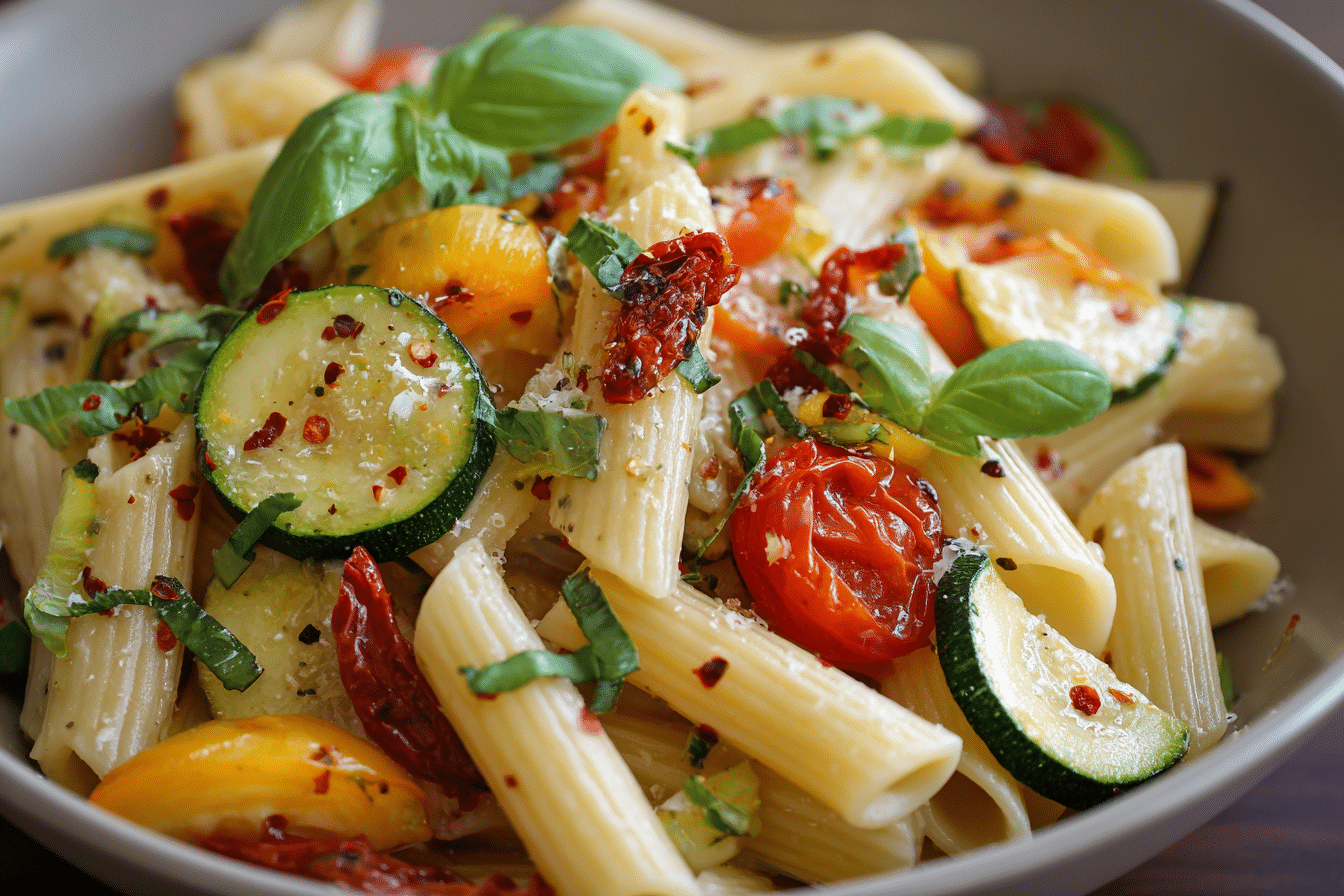
Pasta Primavera is a celebration of fresh vegetables tossed with tender pasta in a light, flavorful sauce. The name “primavera” means spring, and this dish reflects that spirit with its colorful medley of seasonal produce and bright, clean flavors.
Unlike heavy cream-based pasta dishes, Pasta Primavera highlights crisp vegetables and simple ingredients. A touch of olive oil, garlic, and Parmesan ties everything together without overpowering the freshness of the vegetables.
Whether served as a main course or a side dish, Pasta Primavera offers a balanced, satisfying meal that feels wholesome and inviting. It’s adaptable, quick to prepare, and perfect for showcasing whatever vegetables are at their peak.
Ingredients Overview
The base of Pasta Primavera is your choice of pasta. Penne, fettuccine, or farfalle are excellent options. Short pasta shapes capture bits of vegetables, while long noodles create elegant presentation. Choose high-quality pasta and cook it just until al dente for best texture.
A mix of fresh vegetables defines the dish. Zucchini adds tenderness, bell peppers provide sweetness and color, and broccoli contributes structure. Carrots bring subtle sweetness, while cherry tomatoes add juiciness and brightness.
Garlic forms the aromatic base of the sauce. Extra virgin olive oil adds depth and helps sauté the vegetables gently. Fresh basil and parsley contribute fragrance and balance.
Parmesan cheese introduces savory richness. Freshly grated cheese melts smoothly into the warm pasta. For added brightness, a squeeze of lemon juice can be included.
Salt and freshly ground black pepper enhance all the flavors. Red pepper flakes are optional for gentle warmth.
Step-by-Step Instructions
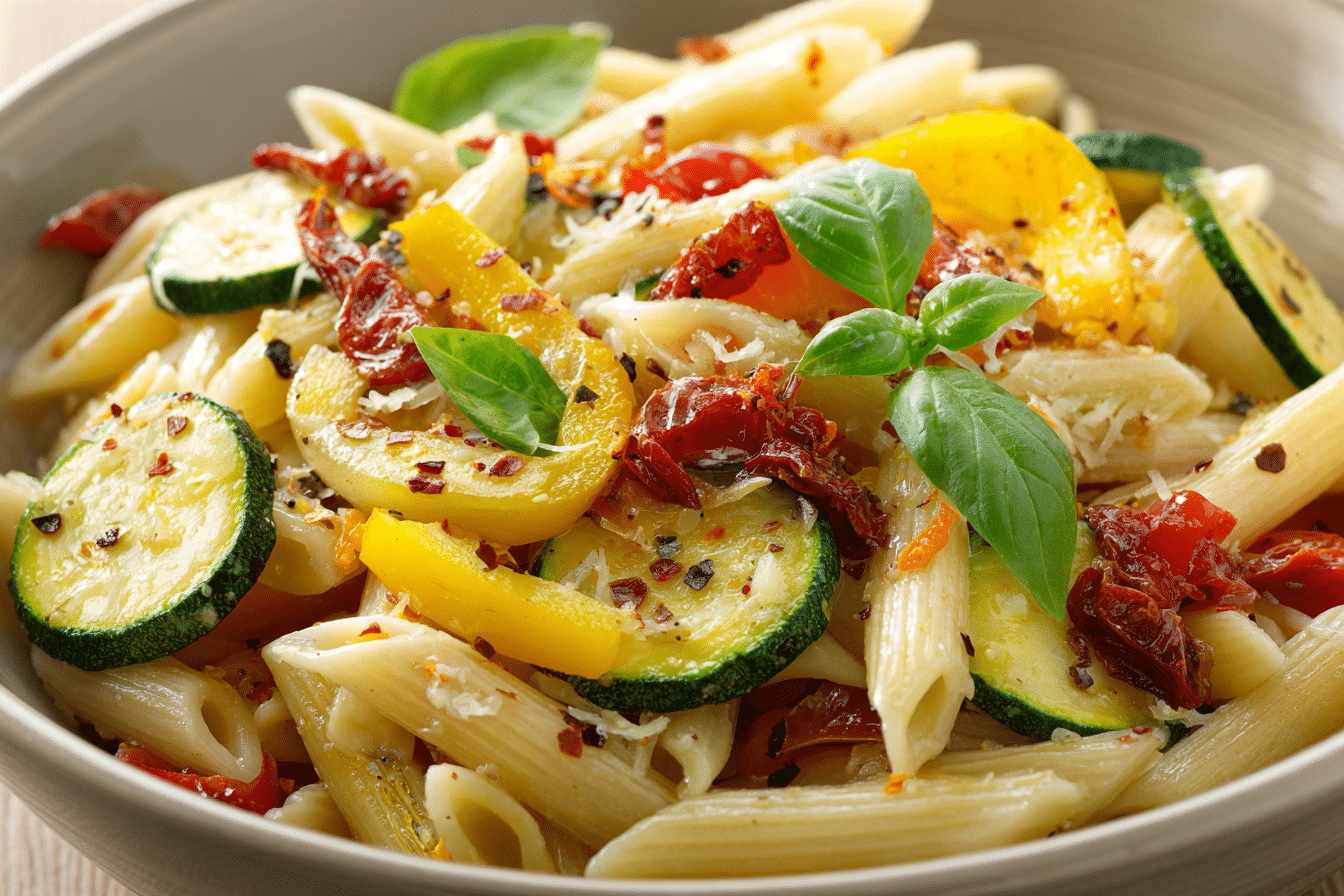
Bring a large pot of salted water to a rolling boil. Add the pasta and cook according to package instructions until just al dente. Reserve about one cup of pasta water before draining.
While the pasta cooks, prepare the vegetables. Slice zucchini into half-moons, thinly slice bell peppers, cut broccoli into small florets, and julienne or thinly slice carrots. Keep pieces similar in size for even cooking.
Heat olive oil in a large skillet over medium heat. Add the carrots and broccoli first, as they require slightly longer cooking time. Sauté for about 3 to 4 minutes.
Add zucchini and bell peppers. Continue cooking for another 3 to 4 minutes, stirring occasionally. The vegetables should be tender but still vibrant and slightly crisp.
Stir in minced garlic and cook for about 30 seconds until fragrant. Add halved cherry tomatoes and cook briefly until they begin to soften.
Transfer the drained pasta directly into the skillet with the vegetables. Toss gently to combine. Add a splash of reserved pasta water to help create a light sauce.
Sprinkle freshly grated Parmesan over the pasta and toss again. The cheese will melt and combine with the pasta water to create a silky coating.
Finish with chopped fresh basil and parsley. Add a squeeze of lemon juice if desired, and season with salt, black pepper, and optional red pepper flakes.
Serve immediately while warm.
Tips, Variations & Substitutions
For added protein, include grilled chicken, shrimp, or white beans. These additions transform the dish into a more filling main course.
You can customize the vegetables based on season. Asparagus, snap peas, mushrooms, or spinach all work well. Add tender greens toward the end of cooking to prevent over-softening.
If you prefer a slightly richer sauce, stir in a small spoonful of cream or mascarpone at the end. Keep it minimal to preserve the light character of the dish.
Whole wheat or gluten-free pasta can be substituted to accommodate dietary preferences. Cook carefully to maintain proper texture.
Avoid overcooking the vegetables. Their slight crispness is part of what makes Pasta Primavera so appealing.
Serving Ideas & Occasions
Pasta Primavera is ideal for spring and summer meals when vegetables are abundant. Serve it as a main dish with a simple green salad and crusty bread.
It also pairs well with grilled fish or roasted chicken. For casual gatherings, present it in a large serving bowl topped with extra herbs and shaved Parmesan.
Because it reheats gently, it can be prepared ahead for weekday lunches. A drizzle of olive oil before serving refreshes the texture.
Nutritional & Health Notes
Pasta Primavera offers carbohydrates for energy along with fiber and vitamins from a variety of vegetables. Using whole grain pasta increases fiber content and supports fullness.
Olive oil provides heart-friendly fats, while Parmesan contributes protein and calcium. The abundance of vegetables adds antioxidants and nutrients without excessive calories.
Portion size plays a role in maintaining balance, especially when including cheese. Pairing the dish with additional vegetables or lean protein creates a well-rounded meal.
Homemade preparation allows control over sodium and ingredient quality, making it a nourishing option for regular enjoyment.
FAQs
What vegetables work best in Pasta Primavera?
A mix of colorful, seasonal vegetables works best. Zucchini, bell peppers, broccoli, carrots, and cherry tomatoes are classic choices. Asparagus, snap peas, mushrooms, or spinach can also be included. The key is to cut them evenly and cook until tender yet still slightly crisp.
Can I make Pasta Primavera ahead of time?
Yes, it can be prepared a few hours in advance. Store it in an airtight container in the refrigerator. When reheating, add a small splash of water or olive oil to loosen the sauce. Fresh herbs are best added just before serving for optimal flavor.
Is Pasta Primavera vegetarian?
Yes, it is vegetarian as written. To keep it vegetarian, use Parmesan made without animal rennet if that is a concern. It can also be made vegan by omitting cheese or substituting a plant-based alternative.
How do I prevent the vegetables from becoming soft?
Cook the vegetables in stages, starting with firmer ones like carrots and broccoli. Keep the heat moderate and avoid overcrowding the pan. Aim for tender-crisp texture to maintain freshness and structure.
Can I add cream to Pasta Primavera?
While traditionally light, a small amount of cream or mascarpone can be added for extra richness. Add it at the end of cooking and stir gently. Keep the amount modest to preserve the dish’s fresh character.
What type of pasta is best?
Short shapes like penne or farfalle hold vegetables well, while long noodles like fettuccine offer a more classic presentation. Choose a shape that captures the vegetables and light sauce evenly.
How long do leftovers last?
Store leftovers in an airtight container in the refrigerator for up to three days. Reheat gently on the stovetop or in the microwave with a small splash of water or olive oil to restore moisture.
………………..
PrintPasta Primavera Recipe with Zucchini and Cherry Tomatoes
Pasta Primavera features tender pasta tossed with a colorful mix of sautéed fresh vegetables, olive oil, garlic, and Parmesan for a light and flavorful meal.
- Prep Time: 15 minutes
- Cook Time: 20 minutes
- Total Time: 35 minutes
- Yield: 4 servings 1x
Ingredients
12 ounces penne or fettuccine pasta
2 tablespoons extra virgin olive oil
2 cloves garlic minced
1 small zucchini sliced
1 red bell pepper sliced
1 cup broccoli florets
1 medium carrot thinly sliced
1 cup cherry tomatoes halved
1/2 cup freshly grated Parmesan cheese
2 tablespoons chopped fresh basil
2 tablespoons chopped fresh parsley
1 tablespoon lemon juice optional
Salt and freshly ground black pepper to taste
Red pepper flakes optional
Instructions
-
Cook pasta in salted boiling water until al dente reserving 1 cup pasta water.
-
Heat olive oil in a large skillet over medium heat.
-
Sauté carrots and broccoli for 3 to 4 minutes.
-
Add zucchini and bell pepper and cook until tender but crisp.
-
Stir in garlic and cook briefly then add cherry tomatoes.
-
Add drained pasta to skillet and toss adding pasta water as needed.
-
Stir in Parmesan and fresh herbs.
-
Season with salt pepper and optional lemon juice.
-
Serve immediately.
Notes
Cook vegetables in stages for best texture.
Reserve pasta water to create a light sauce.
Customize vegetables based on season.