
Fresh Garden Tomato Zucchini Pasta celebrates peak garden produce through a light, colorful pasta dish filled with juicy tomatoes, tender zucchini, and fragrant herbs. During warm seasons, vegetable beds and market stands overflow with ripe tomatoes and glossy green zucchini. This recipe gathers that abundance into a comforting bowl that feels vibrant rather than heavy.
The charm of Fresh Garden Tomato Zucchini Pasta comes from balance. Sweet tomatoes soften into a light sauce while sautéed zucchini adds gentle texture. Garlic and olive oil form a fragrant base that carries every ingredient across the pasta. A scattering of herbs adds brightness while a sprinkle of cheese brings subtle richness.
This dish suits relaxed dinners, outdoor lunches, or casual gatherings. Its ingredients remain familiar yet flavorful, allowing natural vegetable sweetness and garden aroma to stand out clearly. Because preparation remains straightforward, it also fits busy weeknights when a satisfying meal still matters.
Fresh Garden Tomato Zucchini Pasta also adapts easily depending on seasonal produce availability. Additional herbs, different pasta shapes, or small vegetable additions can shift the character of the dish without losing its rustic appeal. The result remains colorful, comforting, and full of garden flavor.
Ingredients Overview
Fresh Garden Tomato Zucchini Pasta relies on simple ingredients that work together through contrast and balance. Each component contributes texture, aroma, or depth, forming a cohesive dish rooted in seasonal cooking.
Pasta acts as the foundation. Medium shapes such as penne, fusilli, or rigatoni hold sauce beautifully while providing pleasant bite. A sturdy shape supports the vegetables without disappearing beneath them. Whole-grain varieties offer a slightly nutty taste and extra fiber, though classic semolina pasta works beautifully as well.
Tomatoes bring brightness and natural sweetness. Cherry or grape tomatoes remain ideal because their small size allows gentle roasting or sautéing while keeping structure intact. During cooking, their juices release slowly, creating a light sauce that coats pasta strands.
Zucchini provides tender texture and mild flavor. When sliced into thin half-moons or small cubes, zucchini cooks quickly while absorbing surrounding flavors from olive oil and garlic. Its gentle taste balances the acidity of tomatoes.
Garlic forms the aromatic base of the dish. When warmed slowly in olive oil, garlic releases fragrance that spreads through the vegetables and pasta.
Olive oil contributes smooth richness and carries the aroma of herbs and garlic. A mild extra-virgin olive oil works well because its flavor supports the vegetables without dominating them.
Fresh herbs add a garden fragrance that defines the dish. Basil remains the most common choice, though parsley or oregano also complement the tomato-zucchini pairing.
Cheese offers savory depth. Grated Parmesan or Pecorino Romano melts lightly into the pasta, adding gentle saltiness and creamy character.
Seasonings remain simple. Salt and freshly ground pepper bring balance and highlight the vegetables. A small pinch of red pepper flakes can introduce mild warmth for diners who enjoy subtle spice.
Together, these ingredients create a dish centered around freshness and texture. Nothing feels complicated, yet every element contributes to the finished bowl.
Step-by-Step Instructions
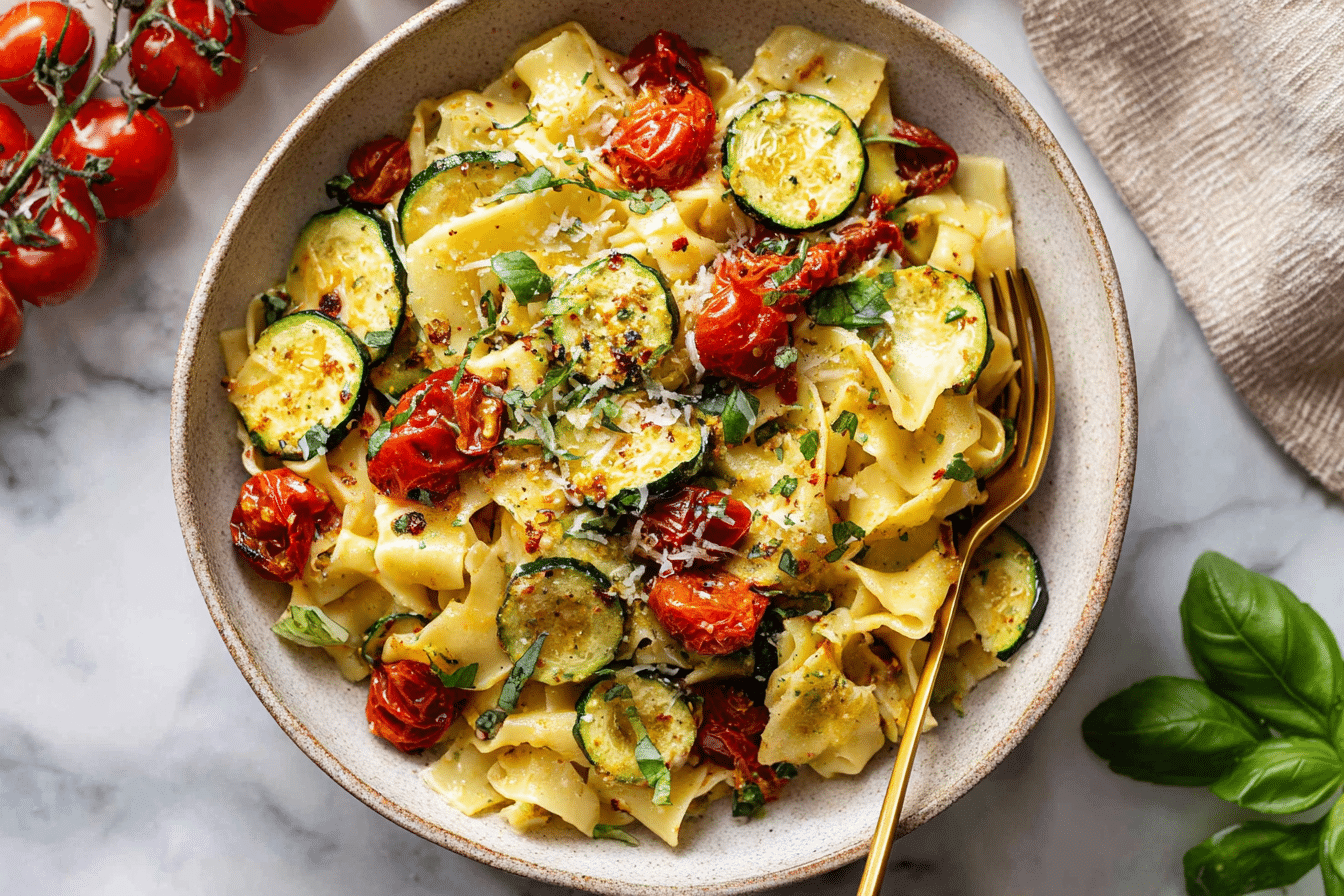
Begin with a large pot filled with salted water. The water should taste lightly seasoned, allowing pasta to absorb flavor during cooking. Bring the pot to a rolling boil before adding the pasta.
Add the pasta and stir briefly so pieces separate evenly. Cook according to package guidance until the pasta reaches a tender texture with a slight firmness in the center. This firmness helps pasta maintain structure once combined with vegetables.
While the pasta cooks, prepare the vegetables. Slice zucchini into thin half-moons or small cubes. Halve cherry tomatoes so their juices release easily during cooking.
Place a large skillet over medium heat and add olive oil. Allow the oil to warm gently rather than smoking.
Add minced garlic to the skillet. Stir slowly for about thirty seconds until a fragrant aroma rises. Garlic should soften without turning dark.
Add sliced zucchini to the skillet. Spread the pieces evenly so surfaces contact the warm pan. Stir occasionally as the zucchini softens and develops light golden edges. This step usually takes four to five minutes.
Next add the halved tomatoes. Stir gently so they combine with the zucchini and garlic. As the tomatoes warm, their juices release and blend with olive oil, forming a light sauce.
Season the mixture with salt, black pepper, and a pinch of red pepper flakes if desired. Allow the vegetables to simmer softly for several minutes. The tomatoes should soften while still holding shape.
Once the pasta finishes cooking, reserve a small cup of the pasta cooking liquid before draining. This starchy liquid can loosen the sauce later if necessary.
Drain the pasta and transfer it directly into the skillet containing the vegetables. Toss carefully so the pasta absorbs the tomato juices and olive oil.
If the mixture appears slightly dry, add a few spoonfuls of the reserved pasta water. The starch within the liquid helps bind the sauce to the pasta.
Scatter grated Parmesan over the skillet and stir gently until it melts through the dish. The cheese thickens the sauce slightly while adding savory depth.
Finally, tear fresh basil leaves and fold them into the pasta. The heat from the skillet releases their aroma without overcooking the herbs.
Taste the pasta and adjust seasoning if needed. Serve immediately while the vegetables remain vibrant and the sauce lightly coats every piece.
Tips, Variations & Substitutions
Fresh Garden Tomato Zucchini Pasta welcomes small adjustments depending on seasonal produce or dietary needs. These variations allow flexibility while maintaining the spirit of the dish.
For deeper flavor, roast the tomatoes briefly in the oven before adding them to the skillet. Roasting concentrates their sweetness and creates a slightly richer sauce.
Yellow summer squash can replace part of the zucchini. The color contrast adds visual appeal while maintaining similar texture and flavor.
Protein additions also work well. Grilled chicken slices, sautéed shrimp, or white beans provide additional substance without overpowering the vegetables.
Herb combinations can shift the overall character. Basil delivers classic Italian aroma, while parsley adds brightness and oregano contributes earthy depth.
A squeeze of lemon juice added just before serving brightens the entire dish and balances the richness of cheese and olive oil.
For a dairy-free option, omit the Parmesan and add toasted pine nuts or crushed walnuts. Nuts introduce gentle crunch and savory depth.
Different pasta shapes also influence the final texture. Fusilli and rotini capture bits of tomato and zucchini within their spirals, while rigatoni offers a hearty bite.
These simple adjustments allow the recipe to adapt across seasons while keeping the central ingredients — tomatoes, zucchini, and pasta — firmly at the heart of the meal.
Serving Ideas & Occasions
Fresh Garden Tomato Zucchini Pasta suits a wide variety of casual dining occasions. Its vibrant colors and light sauce allow it to appear equally comfortable during weeknight dinners or relaxed outdoor meals.
During summer gatherings, this pasta pairs beautifully with grilled vegetables, chicken, or seafood. The light tomato sauce balances smoky flavors from the grill.
For lighter lunches, serve smaller portions alongside a crisp green salad and crusty bread. The combination provides a satisfying yet refreshing meal.
The dish also travels well for potlucks or picnic spreads. After gentle reheating or serving at room temperature, the vegetables remain flavorful and the pasta holds its texture.
Sparkling water with lemon, iced herbal tea, or a chilled white wine complements the fresh tomato and herb flavors beautifully.
Because preparation remains simple and ingredients stay familiar, Fresh Garden Tomato Zucchini Pasta often becomes a dependable seasonal favorite throughout warm months.
Nutritional & Health Notes
Fresh Garden Tomato Zucchini Pasta provides a balanced meal built around vegetables, grains, and moderate dairy.
Tomatoes contain vitamin C, potassium, and antioxidant compounds such as lycopene. Cooking tomatoes with olive oil improves absorption of these beneficial compounds.
Zucchini adds fiber, vitamin A, and hydration due to its naturally high water content. Its mild flavor blends easily with other ingredients while contributing nutritional value.
Pasta supplies carbohydrates that provide sustained energy. Whole-grain pasta increases fiber and micronutrient levels while maintaining satisfying texture.
Olive oil contains monounsaturated fats that support heart health when consumed in moderation. These fats also help the body absorb fat-soluble nutrients present in vegetables.
Parmesan cheese contributes calcium and protein while adding savory depth in relatively small amounts.
Together, these ingredients form a meal that balances comfort and nourishment. When served alongside additional vegetables or a light salad, Fresh Garden Tomato Zucchini Pasta becomes part of a wholesome, vegetable-focused plate.
FAQs
Can Fresh Garden Tomato Zucchini Pasta be prepared ahead of dinner?
Yes. The vegetable mixture can be cooked several hours earlier and stored in the refrigerator. Shortly before dinner, warm the mixture gently in a skillet while cooking fresh pasta. Combining hot pasta with the reheated vegetables restores the light sauce texture and keeps the herbs aromatic. Fresh basil should enter the skillet at the final moment so its fragrance remains vibrant. This approach reduces preparation stress while preserving flavor and texture.
Which tomatoes work best for this pasta recipe?
Cherry or grape tomatoes work particularly well because their small size allows quick cooking while preserving structure. Their natural sweetness balances zucchini and garlic beautifully. Roma tomatoes also function well when diced into small pieces, though they release slightly less juice. Garden-ripe tomatoes harvested during peak season deliver the richest flavor. Regardless of variety, choose tomatoes with firm skins and vibrant color for the best result.
Should zucchini be peeled before cooking?
Peeling zucchini generally is unnecessary. The skin remains tender after cooking and contains additional nutrients and color. Leaving the skin intact also helps the slices maintain structure during sautéing. Washing the zucchini thoroughly and trimming the ends usually provides sufficient preparation. Thin slicing helps the vegetable cook quickly and absorb the surrounding garlic and olive oil flavors.
Can this dish become vegetarian or vegan?
The base recipe already remains vegetarian because it relies primarily on vegetables, pasta, and cheese. For a vegan version, simply omit Parmesan and replace it with toasted pine nuts, chopped almonds, or a sprinkle of nutritional yeast. These additions contribute savory character without dairy. The tomato-zucchini combination remains flavorful even without cheese due to garlic, herbs, and olive oil.
How should leftovers be stored?
Leftovers should enter an airtight container and remain refrigerated. The pasta typically stays enjoyable for about three days. During reheating, add a small splash of water or olive oil to restore moisture because pasta absorbs sauce during storage. Gentle warming on the stovetop preserves vegetable texture better than microwave heating.
Which herbs pair well with tomatoes and zucchini?
Basil remains the most traditional pairing due to its sweet fragrance and bright green aroma. Parsley introduces a fresh herbal note that lightens the dish. Oregano adds slightly earthy depth often associated with Mediterranean cooking. A blend of basil and parsley works particularly well because their flavors complement tomatoes without overwhelming the zucchini.
Can protein be added to this pasta dish?
Yes. Grilled chicken slices, sautéed shrimp, or white beans blend naturally with the tomato-zucchini mixture. Each option contributes additional substance while allowing vegetables to remain central. When adding protein, cook it separately and fold it into the pasta near the end of cooking so the flavors integrate evenly without overcooking the vegetables.
PrintGarden Fresh Zucchini Pasta with Roasted Cherry Tomatoes
Fresh Garden Tomato Zucchini Pasta features tender pasta tossed with sautéed zucchini, sweet tomatoes, garlic, olive oil, herbs, and Parmesan for a light seasonal meal.
- Prep Time: 15 minutes
- Cook Time: 15 minutes
- Total Time: 30 minutes
- Yield: 4 servings 1x
Ingredients
12 ounces penne or fusilli pasta
2 medium zucchini, sliced into half-moons
2 cups cherry tomatoes, halved
3 tablespoons olive oil
3 cloves garlic, minced
1/2 teaspoon salt
1/4 teaspoon black pepper
1/4 teaspoon red pepper flakes optional
1/3 cup grated Parmesan cheese
1/4 cup fresh basil leaves, torn
Instructions
-
Bring a large pot of salted water to a boil.
-
Cook pasta according to package directions until tender with slight firmness.
-
Reserve 1/2 cup pasta cooking liquid, then drain pasta.
-
Warm olive oil in a large skillet over medium heat.
-
Add garlic and cook briefly until fragrant.
-
Add sliced zucchini and cook about 4 to 5 minutes until slightly golden.
-
Stir in halved tomatoes and cook until juices release.
-
Season with salt, pepper, and optional red pepper flakes.
-
Add drained pasta to the skillet and toss with vegetables.
-
Add a few tablespoons reserved pasta water if needed for a light sauce.
-
Stir in Parmesan cheese until melted.
-
Fold in fresh basil and serve warm.
Notes
Whole-grain pasta adds extra fiber and nutty flavor.
A squeeze of lemon just before serving brightens the tomato sauce.