
If you’re looking for a refreshing and healthy side dish that’s quick to prepare yet packed with flavor, Japanese Spinach Salad, also known as Horenso no Goma-ae (ほうれん草の胡麻和え), is a must-try. This traditional Japanese salad features blanched spinach tossed in a delicate sesame dressing that’s savory, slightly sweet, and rich with roasted nuttiness.
It’s a dish that celebrates simplicity and seasonality, often served as part of a Japanese meal alongside rice, miso soup, and grilled fish. Goma-ae translates to “sesame sauce,” and it can be used with other vegetables, too, but spinach is by far the most popular version. Elegant, earthy, and full of umami, this salad is a staple in Japanese home cooking—and once you try it, it might become a favorite in yours too.
Ingredients Overview: Flavorful Components of Japanese Goma-ae
This salad is all about harmony—every ingredient is thoughtfully chosen to enhance natural flavors without overwhelming them.
Fresh Spinach
The base of the dish, spinach brings a slightly bitter, earthy note that pairs beautifully with the sweet and nutty sesame dressing. Choose tender, fresh leaves for best results. Baby spinach can be used, but traditional Japanese cooking uses mature spinach with a firmer texture.
Toasted Sesame Seeds
Sesame seeds are the heart of the dish, offering a deep roasted aroma and a pleasantly crunchy texture. They’re ground to release their oils, which makes the dressing both creamy and fragrant.
Soy Sauce
A splash of soy sauce provides the essential umami flavor and adds depth and saltiness to the dressing. Use Japanese-style soy sauce like Kikkoman or a low-sodium variety if preferred.
Sugar
Just a touch of sugar balances the bitterness of the spinach and the saltiness of the soy sauce. Traditional recipes keep the sweetness subtle, allowing the sesame flavor to shine.
Mirin (Optional)
Mirin is a sweet rice wine that adds a round, mellow sweetness and depth. While optional, it’s a common addition that enhances the traditional taste.
Dashi (Optional)
A teaspoon of dashi (Japanese soup stock) or instant dashi powder can be stirred into the dressing for a deeper umami boost. This is entirely optional but adds a savory layer that echoes Japanese culinary roots.
Step-by-Step Instructions: How to Make Japanese Spinach Salad
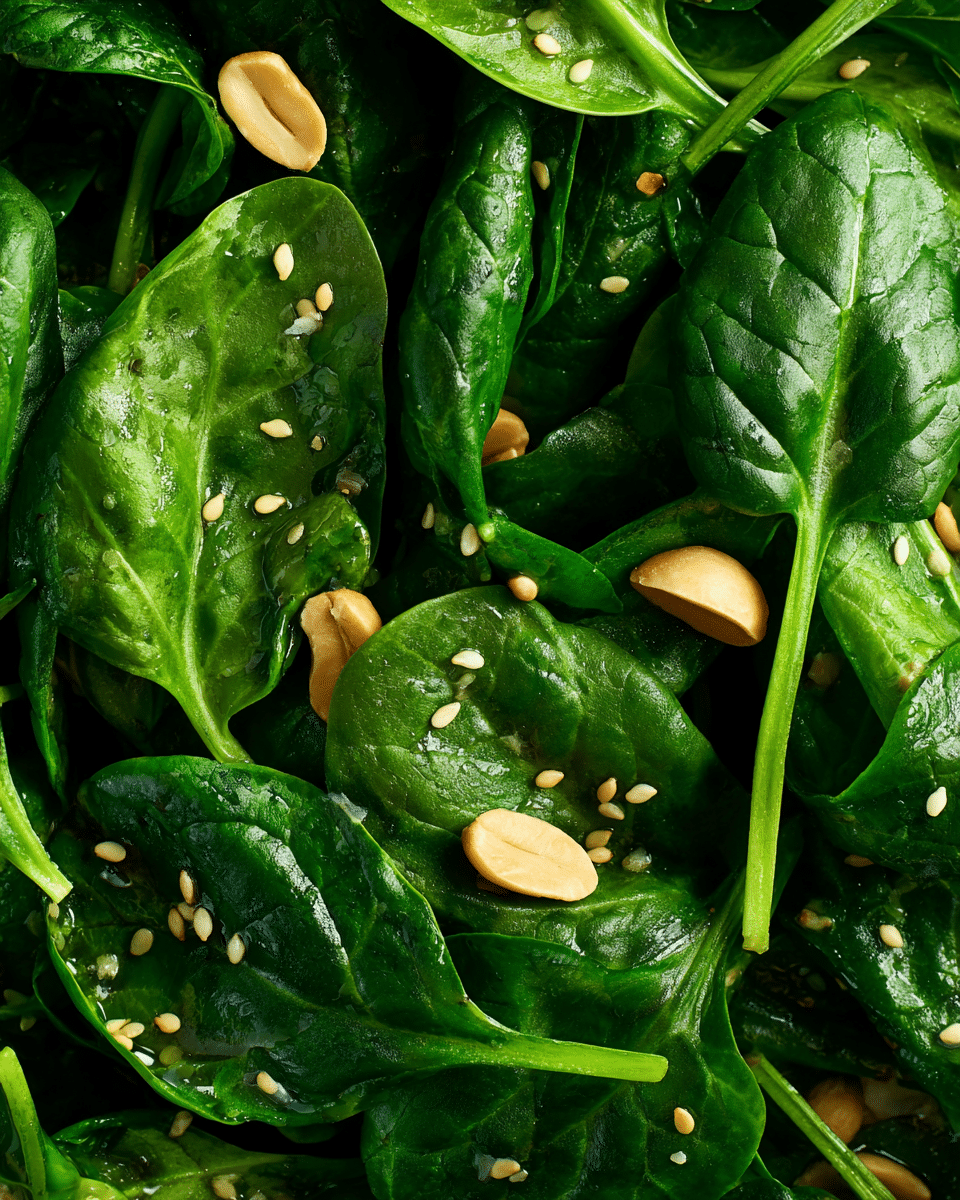
This salad is easy to prepare, and most of the work is done in under 15 minutes. What sets it apart is the attention to detail in handling each ingredient.
1. Blanch the Spinach
-
Bring a pot of water to a boil and add a generous pinch of salt.
-
Add spinach and blanch for just 30–45 seconds until vibrant green and slightly wilted.
-
Immediately transfer the spinach to a bowl of ice water to stop the cooking process.
-
Once cooled, gently squeeze out the excess water from the spinach and cut into 2-inch lengths.
2. Toast and Grind the Sesame Seeds
-
In a dry skillet over medium-low heat, toast 2 tablespoons of white sesame seeds until golden and fragrant, about 2–3 minutes.
-
Transfer to a suribachi (Japanese mortar and pestle) or spice grinder and grind coarsely. You want some texture, not a fine powder.
3. Make the Sesame Dressing (Goma-ae Sauce)
-
Combine the ground sesame seeds with:
-
1 tablespoon soy sauce
-
1 teaspoon sugar
-
Optional: 1 teaspoon mirin or a few drops of dashi
-
-
Stir until the mixture forms a thick, paste-like consistency.
4. Toss and Serve
-
Gently mix the spinach with the sesame dressing until evenly coated.
-
Serve chilled or at room temperature in small bowls, garnished with extra sesame seeds.
Tips, Variations, and Substitutions
Pro Tips
-
Use fresh sesame seeds: The aroma and flavor of freshly toasted seeds are far superior to pre-ground ones.
-
Don’t overcook the spinach: Blanching just until the leaves wilt preserves their bright color and texture.
-
Drain well: Excess moisture from spinach can water down the delicate sesame dressing.
Substitutions
-
Gluten-Free: Use tamari or a gluten-free soy sauce alternative.
-
Sugar-Free: Swap sugar with a touch of maple syrup or skip altogether if desired.
-
Nut-Free Option: Try using sunflower or pumpkin seeds, though this will change the traditional flavor.
Flavor Variations
-
Add grated carrots or blanched green beans for more texture and color.
-
Include a splash of rice vinegar for a slightly tangy twist.
-
Spicy version: Stir in a pinch of shichimi togarashi (Japanese chili pepper mix) or chili oil.
Serving Ideas & Occasions
Japanese Spinach Salad is traditionally served as a side dish (okazu) and fits perfectly into:
-
Bento lunch boxes
-
Seasonal dinners as a refreshing palate cleanser
-
Multi-course Japanese meals with rice, pickles, and grilled proteins
-
Vegetarian and vegan spreads, thanks to its clean flavors and nutrient-dense base
Because it can be made ahead and served cold, it’s also a wonderful dish for:
-
Picnics
-
Potlucks
-
Meal prep lunches
Nutritional & Health Notes
This salad is not only flavorful but also nutrient-rich. Here’s what you’re getting in each serving:
-
Spinach: High in iron, calcium, magnesium, and folate. Also a great source of fiber and antioxidants.
-
Sesame seeds: Packed with healthy fats (especially omega-6s), plant-based protein, calcium, and lignans that support heart health.
-
Low calorie: With no heavy oils or fats, this salad is light yet satisfying.
It’s naturally vegan, low-carb, and can easily be adapted to gluten-free diets—making it a versatile dish for many lifestyles.
FAQ
1. Can I make this salad ahead of time?
Yes! Japanese spinach salad stores well in the fridge for up to 2 days. Store it in an airtight container, and give it a quick toss before serving. It’s actually often enjoyed slightly chilled or at room temperature.
2. Can I use baby spinach instead?
You can, but traditional goma-ae uses mature spinach, which has a firmer texture and slightly stronger flavor. Baby spinach wilts more easily, so blanching time should be reduced to just 15–20 seconds.
3. What can I use instead of sesame seeds?
While sesame is the traditional base, sunflower seeds or tahini can be used as alternatives in case of allergies. The flavor will differ, but the nutty creaminess remains.
4. Is this salad served warm or cold?
It’s most commonly served chilled or at room temperature. This helps the flavors meld and makes it ideal for make-ahead meals or summer servings.
5. Can I use store-bought sesame dressing?
You can, but homemade goma-ae sauce offers fresher flavor and control over sweetness and salt levels. If using store-bought, choose one without additives or thickeners.
6. How do I prevent the dressing from being too runny?
Ensure you squeeze the spinach dry after blanching. Too much water dilutes the sesame dressing. Also, don’t add too much soy sauce or mirin—start small and adjust.
7. Can I add protein to this salad?
Yes! Add thinly sliced grilled tofu, shredded poached chicken, or a soft-boiled egg to turn it into a light meal. The sesame dressing pairs well with mild proteins.
PrintJapanese Sesame Spinach – Quick and Healthy Side
Japanese Spinach Salad (Goma-ae) features tender blanched spinach tossed in a sweet-savory sesame dressing. It’s an elegant, healthy side dish perfect for bento boxes or light meals.
- Prep Time: 10 minutes
- Cook Time: 5 minutes
- Total Time: 15 minutes
- Yield: 2–3 servings as a side dish 1x
Ingredients
-
1 bunch fresh spinach (about 10 oz)
-
2 tablespoons white sesame seeds
-
1 tablespoon soy sauce
-
1 teaspoon sugar
-
Optional: 1 teaspoon mirin or 1/2 tsp dashi powder
-
Salt (for blanching water)
Instructions
-
Bring a pot of salted water to a boil. Blanch spinach for 30–45 seconds, then transfer to ice water. Squeeze dry and cut into 2-inch sections.
-
Toast sesame seeds in a dry skillet for 2–3 minutes until golden. Grind coarsely in a mortar and pestle.
-
Mix ground sesame with soy sauce, sugar, and optional mirin or dashi to form a paste.
-
Toss spinach with sesame dressing until evenly coated. Serve chilled or at room temperature.
Notes
-
Use gluten-free tamari if needed.
-
Can be made ahead and stored for up to 2 days in the fridge.
-
Garnish with extra sesame seeds or a few drops of sesame oil.