
The Best Greek Salad Recipe for You brings together sun-ripened vegetables, briny olives, creamy feta, and a simple olive oil dressing that tastes like summer in every bite. This is a dish built on contrast: juicy tomatoes against crisp cucumber, sharp red onion balanced by salty cheese, and fragrant oregano tying everything together.
In Greece, this salad is known as horiatiki, or village salad. It is rustic, unfussy, and deeply rooted in tradition. There is no lettuce to distract from the core ingredients, and no heavy dressing to mask their flavor. Every component stands on its own while blending beautifully with the rest.
Whether served alongside grilled meats or enjoyed with warm bread as a light meal, The Best Greek Salad Recipe for You delivers freshness, texture, and bold Mediterranean character in the simplest way.
Ingredients Overview
The heart of The Best Greek Salad Recipe for You lies in the quality of its ingredients. Because the recipe is straightforward, each component plays an essential role.
Tomatoes are the foundation. Choose ripe, firm tomatoes that feel heavy for their size. Vine-ripened or Roma tomatoes work well, as they hold their shape when cut. Their sweetness and natural juices create part of the dressing once mixed with olive oil and vinegar.
Cucumber adds crunch and coolness. An English cucumber is ideal because it has fewer seeds and thinner skin, but a standard cucumber works if peeled and seeded. The crisp texture balances the softness of the tomatoes and feta.
Red onion contributes a gentle bite. Thin slicing is key to avoid overpowering the salad. If you prefer a milder flavor, soak the slices in cold water for ten minutes before adding them.
Kalamata olives provide briny depth. Their rich, fruity flavor is classic in Greek cuisine. If unavailable, use another high-quality black olive, but avoid canned varieties with a metallic taste.
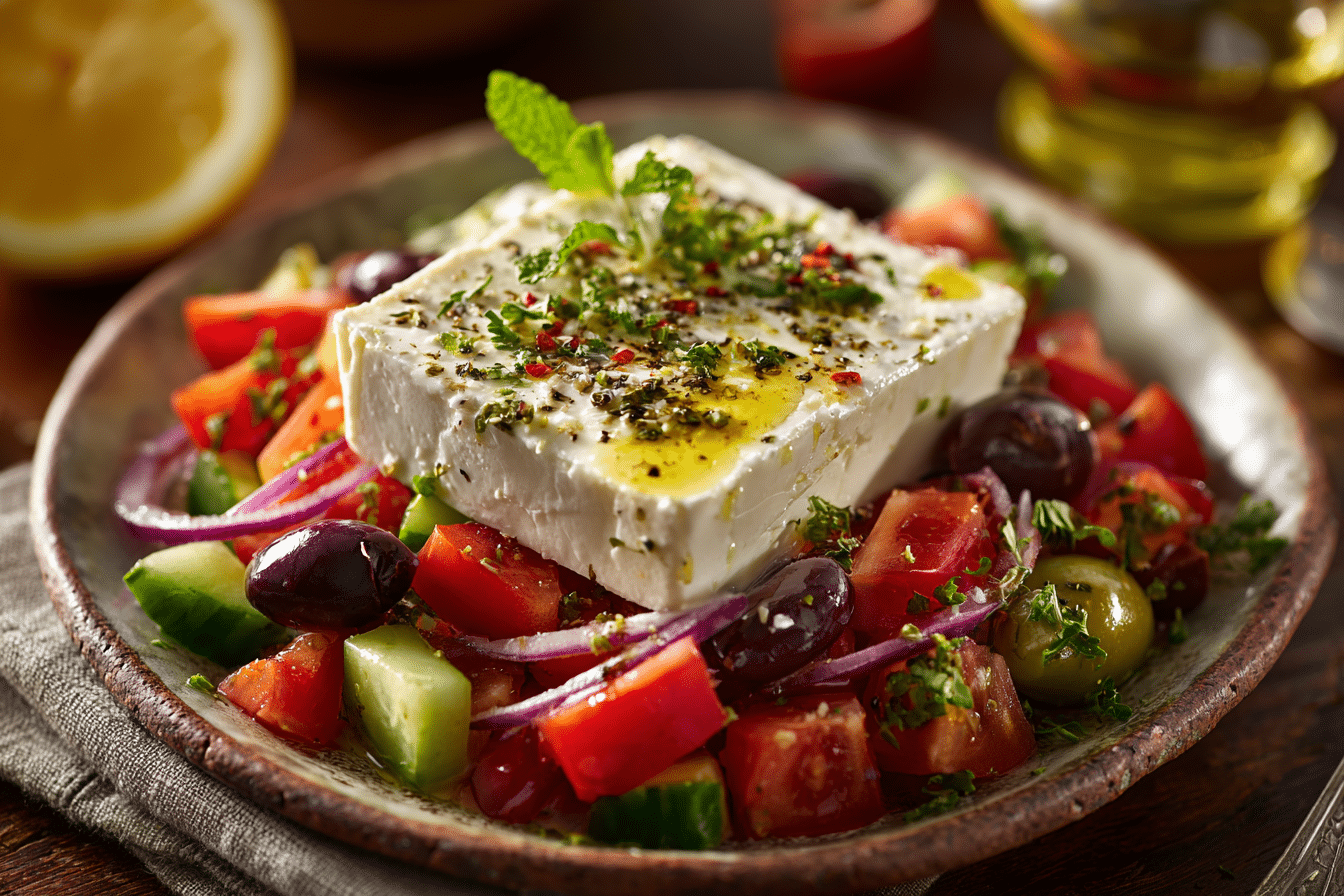
Feta cheese is essential. Look for authentic Greek feta made from sheep’s milk or a blend of sheep and goat milk. It should be firm yet creamy, with a tangy, salty flavor. Instead of crumbling it finely, cut it into large chunks or place a slab on top, as is traditional.
Extra virgin olive oil forms the base of the dressing. Choose a robust, fruity oil for the most authentic taste. Red wine vinegar adds brightness and slight acidity. Dried oregano, preferably Greek oregano, gives the salad its signature aroma. A pinch of sea salt and freshly ground black pepper complete the seasoning.
Step-by-Step Instructions
Begin by preparing the vegetables. Wash and dry the tomatoes thoroughly. Cut them into large wedges or bite-sized chunks. The pieces should be substantial, not diced too small, so they hold their texture and release juices gradually.
Peel the cucumber if the skin is thick or waxed. Slice it lengthwise and, if necessary, scoop out the seeds with a spoon. Cut into thick half-moons. The goal is a firm, crunchy bite that stands up to the dressing.
Slice the red onion as thinly as possible. If you are sensitive to its sharpness, place the slices in a bowl of cold water for about ten minutes. Drain and pat dry before adding to the salad. This softens the flavor without removing its character.
In a large mixing bowl, combine the tomatoes, cucumber, red onion, and Kalamata olives. Toss gently to distribute the ingredients evenly. Avoid stirring too aggressively, as tomatoes can break down and make the salad watery.
Prepare the dressing separately. In a small bowl, whisk together extra virgin olive oil and red wine vinegar in a ratio of about three parts oil to one part vinegar. Add dried oregano, a pinch of salt, and freshly ground black pepper. Taste and adjust if necessary. The dressing should be bright but not overly acidic.
Pour the dressing over the vegetables and toss lightly. The tomatoes will release some of their juices, blending with the oil and vinegar to create a flavorful coating.
Finally, add the feta. You can either crumble it into large pieces or place a thick slab directly on top of the salad. Sprinkle a small pinch of oregano over the cheese and drizzle with a touch more olive oil.
Let the salad rest at room temperature for 10 to 15 minutes before serving. This allows the flavors to meld without making the vegetables soggy. Avoid refrigerating for too long before serving, as cold temperatures can dull the flavor of tomatoes and olive oil.
Common mistakes include overdressing the salad, using unripe tomatoes, or cutting the vegetables too small. Keeping the pieces generous and the seasoning balanced is the key to achieving The Best Greek Salad Recipe for You.
Tips, Variations & Substitutions
For the most authentic result, keep the ingredient list short and traditional. Avoid adding lettuce, which is not part of a classic Greek village salad. The beauty of this dish lies in its simplicity.
If you prefer a slightly sweeter note, add a few thin slices of green bell pepper. While not always included, it is common in some regional versions and adds extra crunch.
To make the salad more filling, serve it with grilled chicken, lamb skewers, or chickpeas. For a vegetarian protein boost, toss in a handful of white beans, though this shifts the dish away from strict tradition.
If you do not have red wine vinegar, a splash of fresh lemon juice can be used. It brings a brighter citrus note that pairs well with the olive oil and feta.
For a dairy-free version, omit the feta and increase the olives slightly for added saltiness. The salad will still be vibrant and satisfying.
Always season lightly at first. Feta and olives are naturally salty, so taste before adding more salt.
Serving Ideas & Occasions
The Best Greek Salad Recipe for You is versatile enough for both casual and festive meals. Serve it as a refreshing starter at a summer dinner or as part of a larger Mediterranean spread.
It pairs beautifully with grilled meats such as chicken souvlaki, lamb chops, or fish seasoned with lemon and herbs. Warm pita bread or crusty country bread is perfect for soaking up the flavorful juices at the bottom of the bowl.
For outdoor gatherings, this salad travels well. Prepare the vegetables and dressing separately, then combine shortly before serving to keep everything crisp.
It also works as a light lunch when served with a side of hummus or stuffed grape leaves. The bright flavors and crisp textures make it especially welcome during warmer months.
Nutritional & Health Notes
The Best Greek Salad Recipe for You is naturally rich in fresh vegetables and healthy fats. Tomatoes provide vitamin C and antioxidants such as lycopene. Cucumbers add hydration and fiber while remaining low in calories.
Extra virgin olive oil is a source of monounsaturated fats, which are associated with heart-friendly eating patterns when consumed in moderation. Olives contain beneficial plant compounds and contribute satisfying flavor without heavy sauces.
Feta cheese adds protein and calcium, though it is higher in sodium. Using moderate portions helps maintain balance.
This salad is naturally gluten-free and can easily fit into Mediterranean-style eating habits. Its focus on whole ingredients and simple preparation makes it a wholesome addition to many meals.
FAQs
-
Can I make Greek salad ahead of time?
You can prepare the vegetables a few hours in advance, but store them separately from the dressing. Combine everything about 15 minutes before serving. If mixed too early, the tomatoes and cucumbers release excess moisture, which can dilute the flavor and soften the texture.
-
Why is there no lettuce in traditional Greek salad?
Authentic Greek village salad does not include lettuce. The dish highlights tomatoes, cucumber, olives, onion, and feta. Adding lettuce changes the texture and shifts it away from its rustic roots.
-
What type of feta is best for this recipe?
Block feta packed in brine is ideal. It has a firmer texture and richer flavor compared to pre-crumbled versions. Sheep’s milk feta offers a creamy consistency and tangy taste that complements the vegetables perfectly.
-
Can I use cherry tomatoes instead of large tomatoes?
Yes, cherry or grape tomatoes work well, especially when larger tomatoes are out of season. Slice them in halves to release their juices and allow the dressing to coat them evenly.
-
How do I keep the salad from becoming watery?
Use firm, ripe tomatoes and remove excess seeds from cucumbers if they are very watery. Avoid salting the vegetables too far in advance, and mix the dressing in just before serving.
-
Is Greek salad suitable for a low-carb diet?
Yes, this salad is relatively low in carbohydrates. The vegetables are low in natural sugars, and the dressing contains no added sweeteners. It can be a satisfying option for those limiting carbs.
-
Can I store leftovers?
Leftovers can be refrigerated in an airtight container for up to one day. Keep in mind that the vegetables will soften and release more liquid over time. Stir gently before serving again and adjust seasoning if needed.
PrintMediterranean Greek Salad for a Light Lunch

A traditional Greek village salad made with ripe tomatoes, crisp cucumber, red onion, Kalamata olives, and authentic feta dressed in olive oil and red wine vinegar.
- Prep Time: 15 minutes
- Cook Time: 0 minutes
- Total Time: 15 minutes
- Yield: 4 servings 1x
Ingredients
4 ripe tomatoes cut into wedges
1 large English cucumber sliced into thick half-moons
1 small red onion thinly sliced
3/4 cup Kalamata olives pitted
6 ounces feta cheese cut into large chunks
1/4 cup extra virgin olive oil
1 tablespoon red wine vinegar
1 teaspoon dried oregano
Salt to taste
Freshly ground black pepper to taste
Instructions
-
Wash and cut the tomatoes into large wedges.
-
Slice the cucumber into thick half-moons, removing seeds if necessary.
-
Thinly slice the red onion and soak in cold water for 10 minutes if a milder flavor is desired. Drain well.
-
In a large bowl combine tomatoes, cucumber, red onion, and olives.
-
In a small bowl whisk together olive oil, red wine vinegar, oregano, salt, and pepper.
-
Pour the dressing over the vegetables and toss gently to combine.
-
Add the feta on top in large chunks and drizzle with a small amount of olive oil.
-
Let the salad rest for 10 to 15 minutes at room temperature before serving.
Notes
Use high-quality olive oil and authentic feta for the most traditional flavor. Avoid overmixing to keep the vegetables intact. Serve at room temperature for best taste.