
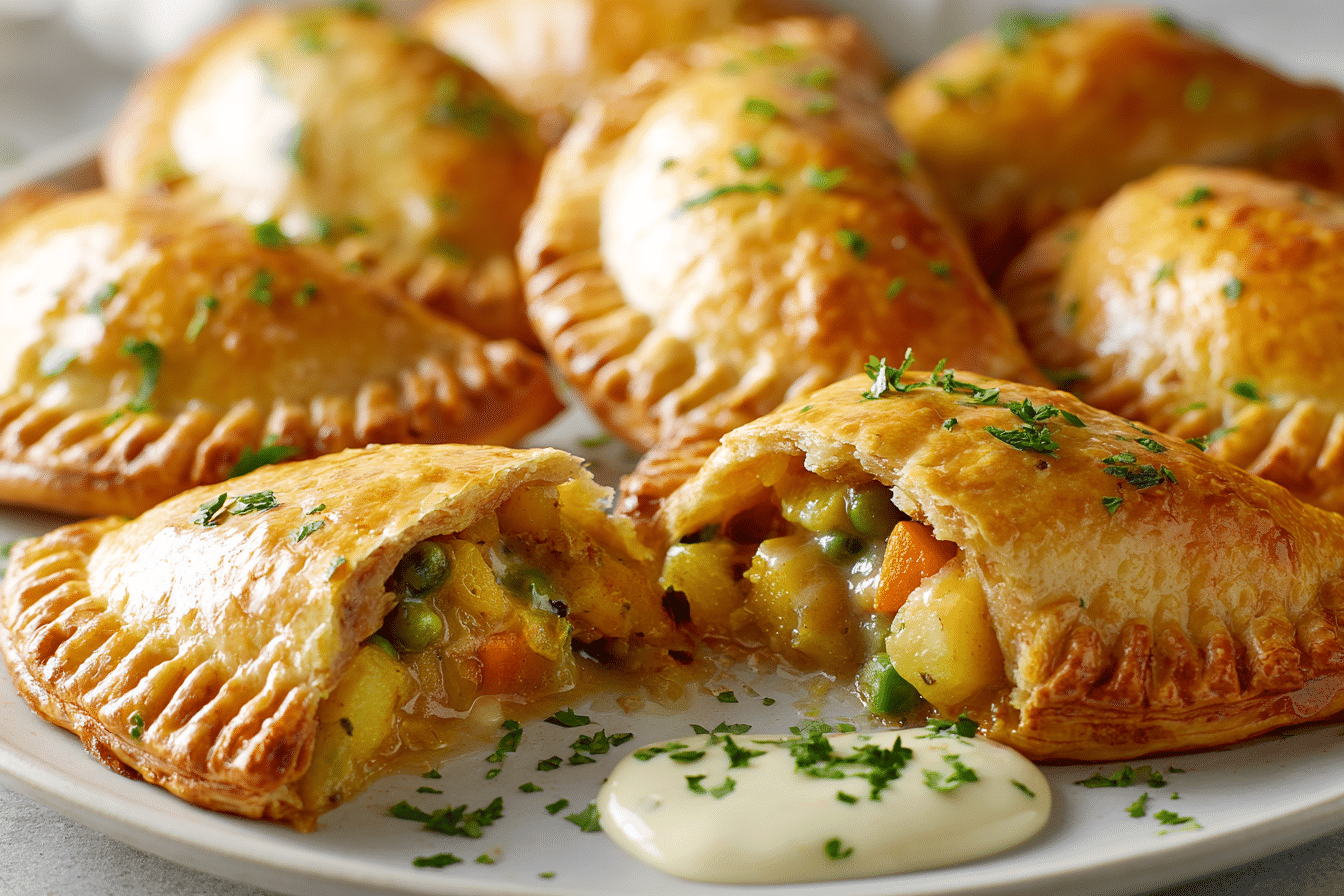
Vegetable Irish Pasties bring together tender root vegetables, flaky pastry, and simple seasoning in a hand-held pie that feels both rustic and comforting. Wrapped in a golden crust and baked until crisp, these pasties carry the warmth of a traditional Irish kitchen in every bite.
This recipe highlights humble ingredients like potatoes, carrots, onions, and cabbage, all tucked inside buttery dough. As they bake, the vegetables soften and mingle, creating a savory filling that is deeply satisfying without relying on meat.
Vegetable Irish Pasties are ideal for cozy dinners, packed lunches, or gatherings where hearty fare is welcome. Their sturdy shape makes them easy to serve, while their rich, earthy flavor keeps everyone reaching for another warm pastry.
Ingredients Overview
The heart of Vegetable Irish Pasties lies in simple vegetables that cook gently inside the pastry shell. Potatoes form the base of the filling. Choose waxy varieties such as Yukon Gold or red potatoes, which hold their shape while turning tender and creamy during baking.
Carrots add sweetness and color. Dice them finely so they soften at the same pace as the potatoes. Onions provide depth and aroma. Yellow or white onions work well, though leeks can be substituted for a milder flavor.
Green cabbage is a traditional addition in many Irish-style vegetable pasties. It cooks down beautifully, adding subtle sweetness and structure. If cabbage is unavailable, finely chopped kale or savoy cabbage can stand in.
Butter enriches the filling and pastry. For a dairy-free version, use a firm plant-based butter. Fresh thyme or parsley adds gentle herbal notes without overpowering the vegetables. Salt and freshly ground black pepper bring balance.
The pastry itself can be homemade using flour, cold butter, salt, and chilled water. A sturdy shortcrust dough is essential, as it must hold the filling without becoming soggy. Store-bought shortcrust pastry can be used for convenience, provided it is thick enough to support the hearty filling.
Step-by-Step Instructions
Begin by preparing the pastry dough. In a large bowl, combine all-purpose flour and salt. Cut cold butter into small cubes and rub it into the flour using your fingertips until the mixture resembles coarse crumbs. Work quickly to keep the butter cold.
Gradually add chilled water, a tablespoon at a time, mixing gently until the dough just comes together. Avoid overworking, as this can result in a tough crust. Shape the dough into a disc, wrap it in parchment, and refrigerate for at least 30 minutes.
While the dough rests, prepare the filling. Peel and dice the potatoes into small, even cubes about 1/4 inch wide. Finely dice the carrots and onion. Shred the cabbage thinly. Keeping the pieces small allows them to cook thoroughly inside the pastry.
In a large bowl, combine the diced vegetables. Season with salt, black pepper, and chopped fresh thyme or parsley. Toss well so the seasoning is evenly distributed. Dot the mixture with small pieces of butter.
Preheat the oven to 400°F (200°C). Line a baking sheet with parchment paper.
Remove the chilled dough and divide it into equal portions, depending on how large you would like each pasty. Roll each portion into a circle roughly 8 inches wide and about 1/8 inch thick.
Place a generous mound of the vegetable mixture onto one half of each pastry circle, leaving a border around the edge. Avoid overfilling, as this can cause leaks during baking.
Fold the empty half of dough over the filling to create a half-moon shape. Press the edges firmly together, then crimp with a fork or pinch decoratively to seal. Cut a small slit in the top of each pasty to allow steam to escape.
Arrange the pasties on the prepared baking sheet. Brush the tops lightly with beaten egg or milk for a golden finish.
Bake for 35 to 45 minutes, until the crust is golden brown and firm. The filling should be tender when tested through the steam vent with a thin knife.
Allow the Vegetable Irish Pasties to cool slightly before serving. This brief rest helps the filling settle and prevents steam burns when cutting into them.
Tips, Variations & Substitutions
For deeper flavor, sauté the onions briefly in butter before mixing them with the raw vegetables. This step adds a subtle sweetness to the filling.
If you prefer additional texture, add diced parsnips or turnips. Both vegetables complement the potato base and stay true to traditional Irish flavors.
Cheese can be folded into the mixture for a richer version. A small handful of grated sharp cheddar blends well with the vegetables without overwhelming them.
For a vegan adaptation, replace butter with plant-based alternatives and brush the pastry with oat milk instead of egg wash.
To prevent soggy bottoms, avoid washing the vegetables after chopping. Excess moisture can soften the pastry during baking. If the vegetables seem damp, pat them dry with a clean towel before mixing.
Serving Ideas & Occasions
Vegetable Irish Pasties are versatile and fit many occasions. Serve them warm alongside a simple green salad dressed with mustard vinaigrette for a balanced supper.
They pair beautifully with a bowl of vegetable soup or a light broth. For gatherings, arrange them on a wooden board with pickles and sharp cheddar for a rustic spread.
These pasties are also ideal for packed lunches or picnics. Their sturdy crust keeps the filling contained, making them easy to transport and enjoy at room temperature.
During cooler months, they provide a satisfying centerpiece for a casual family meal. In warmer weather, serve them slightly cooled with fresh herbs sprinkled over the top.
Nutritional & Health Notes
Vegetable Irish Pasties offer a balanced combination of carbohydrates, fiber, and moderate fat. Potatoes supply complex carbohydrates and potassium, while carrots and cabbage contribute vitamins A and C.
Using butter in moderation provides richness, though plant-based alternatives can reduce saturated fat if desired. Baking rather than frying keeps the overall fat content reasonable.
Including a variety of root vegetables adds fiber, which supports digestion and helps maintain steady energy levels. Pairing a pasty with a fresh salad increases nutrient diversity and adds brightness to the meal.
Portion size plays a role in overall balance. Serving with vegetables or broth can round out the plate while keeping the meal satisfying.
FAQs
Can Vegetable Irish Pasties be prepared in advance?
Yes, Vegetable Irish Pasties can be assembled ahead of baking. Prepare the filling and pastry, shape the pasties, and store them covered in the refrigerator for up to 24 hours before baking. This resting period can even improve flavor as the vegetables absorb the seasoning. If baking from chilled, add a few extra minutes to the cooking time to allow the centers to heat fully. Alternatively, bake them completely and reheat in a moderate oven until warmed through. Avoid microwaving if possible, as it can soften the crust.
Can these pasties be frozen?
Vegetable Irish Pasties freeze well either before or after baking. To freeze unbaked pasties, place them on a tray until solid, then transfer to a sealed container. Bake directly from frozen, adding additional baking time as needed. If freezing baked pasties, cool them completely before wrapping individually. Reheat in an oven at 350°F (175°C) until heated through and crisp. Properly stored, they can be kept frozen for up to three months without significant loss of texture.
How do I prevent the pastry from becoming soggy?
Keeping moisture under control is essential. Dice vegetables evenly and avoid washing them after cutting. If they appear wet, pat dry with a towel. Another helpful step is to keep the pastry cold before baking, as cold fat creates a sturdier crust. Cutting a small vent in the top allows steam to escape during baking, reducing internal moisture buildup. Baking on the lower oven rack can also help crisp the base.
Are Vegetable Irish Pasties traditionally vegetarian?
Traditional Irish pasties often included meat such as beef or lamb, but vegetable versions have long been prepared, especially in rural households where root vegetables were plentiful. The vegetarian version reflects a practical approach to cooking with available produce. By focusing on potatoes, carrots, onions, and cabbage, this adaptation stays rooted in classic flavors while offering a meat-free alternative suitable for various diets.
What type of pastry works best?
A sturdy shortcrust pastry is ideal for Vegetable Irish Pasties. It provides enough structure to hold the filling without collapsing. Puff pastry can be used, though it produces a lighter and flakier result that may be less traditional. If using store-bought dough, select a variety labeled for savory pies. Thickness matters; rolling the dough too thin can lead to tears and leaks during baking.
Can I add herbs or spices?
Fresh thyme and parsley are common choices that complement the vegetables without overpowering them. A small pinch of nutmeg can add warmth, while a touch of mustard powder introduces subtle depth. Keep seasoning moderate to preserve the character of the root vegetables. Adding too many spices may mask the traditional profile that defines Vegetable Irish Pasties.
How should leftovers be stored?
Allow the pasties to cool completely before storing. Place them in an airtight container and refrigerate for up to three days. Reheat in a preheated oven at 350°F (175°C) for about 15 minutes, or until warmed through and crisp again. Avoid stacking them while warm, as trapped steam can soften the crust. Proper storage helps maintain texture and flavor for later enjoyment.
PrintVegetable Irish Pasties Recipe with Potatoes, Carrots, and Peas

Vegetable Irish Pasties are hearty hand-held pastries filled with diced potatoes, carrots, onions, and cabbage, wrapped in a flaky shortcrust and baked until golden.
- Prep Time: 30 minutes
- Cook Time: 40 minutes
- Total Time: 1 hour 10 minutes
- Yield: 4 large pasties 1x
Ingredients
2 1/2 cups all-purpose flour
1 teaspoon salt
1 cup cold unsalted butter, cubed
6 to 8 tablespoons chilled water
2 medium Yukon Gold potatoes, peeled and finely diced
1 large carrot, finely diced
1 small onion, finely diced
1 cup finely shredded green cabbage
2 tablespoons butter, cut into small pieces
1 tablespoon chopped fresh thyme or parsley
1 teaspoon salt
1/2 teaspoon freshly ground black pepper
1 egg, beaten for brushing
Instructions
-
In a bowl, combine flour and salt. Rub in cold butter until crumbly.
-
Add chilled water gradually until a dough forms. Shape into a disc and chill for 30 minutes.
-
Preheat oven to 400°F 200°C and line a baking sheet with parchment.
-
In a separate bowl, mix potatoes, carrot, onion, cabbage, herbs, salt, and pepper.
-
Divide dough into portions and roll each into an 8-inch circle.
-
Spoon filling onto one half of each circle and dot with small pieces of butter.
-
Fold dough over filling, seal edges, and crimp. Cut a small vent on top.
-
Brush with beaten egg and bake for 35 to 45 minutes until golden and tender inside.
-
Cool slightly before serving.
Notes
Dice vegetables evenly for consistent cooking.
Keep pastry cold before baking for a crisp crust.
Pasties can be frozen before or after baking.